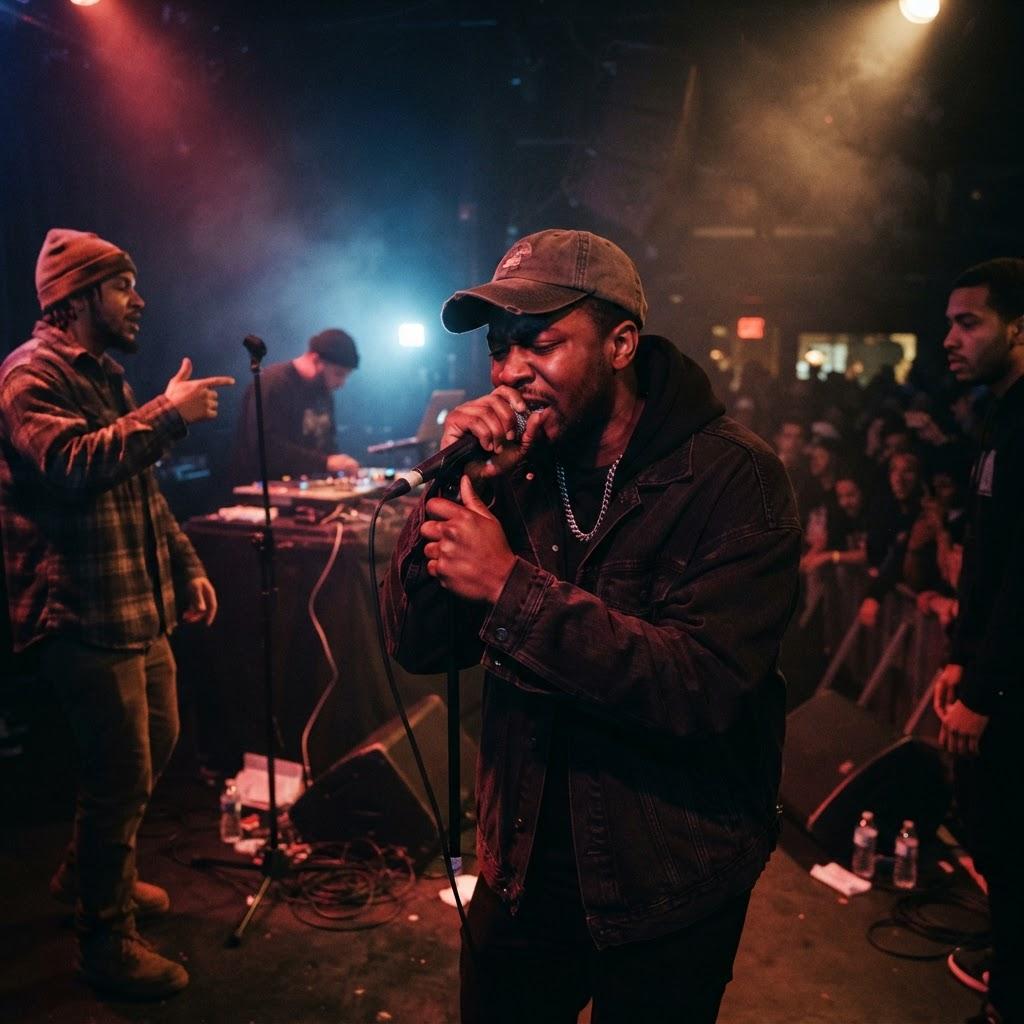
Mid-1980s, Los Angeles, California
Gangsta Rap
Gangsta Rap is the rebellious, street-smart cousin of hip-hop that turned raw neighborhood storytelling into a global sonic juggernaut. It is equal parts gritty cinematic drama, defiant social commentary, and pure, high-octane attitude that refuses to be ignored.
Meet the Genre
Picture this: it is a humid summer night in the mid-eighties, you are rolling down a palm-lined boulevard with the windows down, and the air feels like it is vibrating with a mix of diesel exhaust and pure, unadulterated tension. That is the feeling of Gangsta Rap. It does not knock on your door politely; it kicks it down, sits on your couch, and forces you to listen to a story about a life you might never have witnessed firsthand. This genre is the musical equivalent of a noir crime thriller played at full volume. It is unfiltered, unapologetic, and dripping with a street-level charisma that makes you feel like you are driving a low-rider even if you are just sitting in your office chair. It is not just about the lyrics; it is about the mood—a complex cocktail of defiance, pride, and survival. Gangsta Rap is the sound of the underdog taking the megaphone and refusing to be silenced, turning the chaos of the environment into a rhythmic, head-nodding manifesto of existence. You don't just hear this music; you feel it in your teeth.
The Sound & Signature Elements
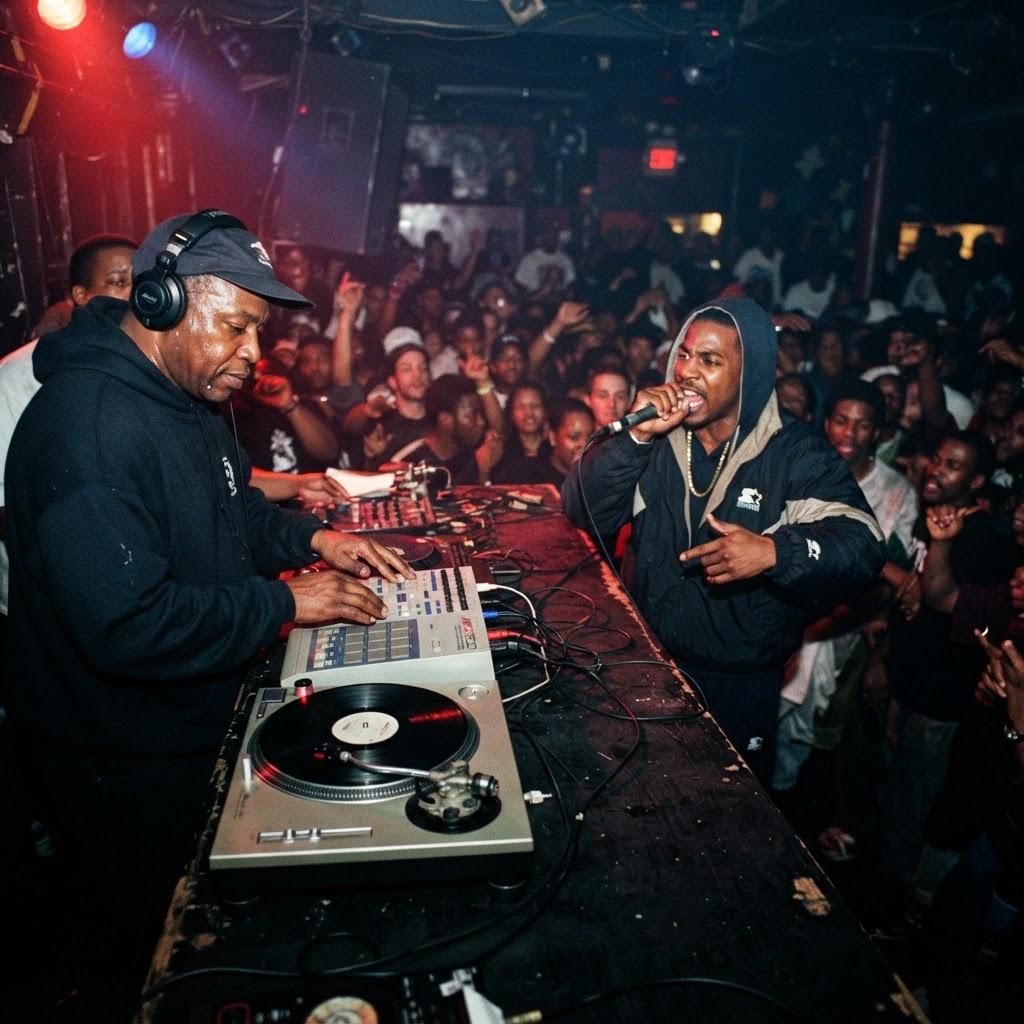
At its sonic heart, Gangsta Rap is built on the sturdy, earthquake-inducing backbone of the Roland TR-808 drum machine. Think of the 808 as the heartbeat of the genre—its kicks are so deep and booming that they essentially act as a second bass line, rattling the trunks of cars and the walls of bedrooms across the globe. The tempo usually sits in that sweet, mid-range pocket—somewhere between 80 and 100 beats per minute—which is perfect for the kind of slow-rolling, aggressive strut that defines the aesthetic. Producers often pillage the vaults of 1970s funk records, grabbing a slick, brassy horn loop or a squelchy bass line, chopping it up, and layering it over those heavy, crisp snare hits. It is like taking a classic, groovy dinner party track and stripping it down to its darkest, meanest parts. You will often hear 'synths'—electronic keyboards—that sound like piercing, high-pitched whistles or mournful, ghostly wails, creating a sense of dread that contrasts perfectly with the thick, heavy funk underneath. The rapping style is typically 'staccato' or choppy, emphasizing punchy delivery that lands exactly on the beat like a heavyweight boxer working a speed bag.
Origins & Birth of the Sound
Before it became a global titan, Gangsta Rap was a scrappy, localized secret brewing in the boiling pots of South Central Los Angeles. While the East Coast was busy refining the art of complex lyricism and intricate, jazz-inspired rhyme schemes, the West Coast was dealing with a different kind of reality. The creative spark ignited when artists began to document the specific, harsh conditions of their neighborhoods, turning the nightly news reports of urban decay into poetic, visceral street dispatches. It was born in cramped home studios, where cheap gear and expensive dreams collided. There was no corporate polish here; it was raw ingenuity at play. Producers like Dr. Dre and Ice-T realized they didn't need to mimic the New York sound—they could forge their own. They turned to the samples of Parliament-Funkadelic and Zapp to create a soundscape that felt like a warm, Californian summer turned cold. It was an act of extreme defiance to put the realities of police patrols, gang activity, and systemic neglect onto wax, but once the first few records started circulating, the dam broke. Suddenly, the unspoken stories of the street were the hottest commodity in the recording industry.
The Pioneers & Legends
You cannot talk about the Mount Rushmore of Gangsta Rap without mentioning the architects who laid the foundation. First, there is Ice-T, the man who brought the narrative structure of a crime novel to the microphone and showed everyone that rap could be cinematic. Then there is N.W.A., the collective that effectively acted as the detonator for the whole genre, with members like Eazy-E providing the chaotic, charismatic personality, and Ice Cube bringing the razor-sharp, politically charged lyrical edge that turned heads across the nation. Dr. Dre, meanwhile, was the mad scientist in the laboratory, crafting sonic soundscapes that were so polished and layered that they became the blueprint for everything that followed. And let us not forget the tragic, larger-than-life figure of Tupac Shakur, who injected a level of poetic sensitivity and raw, philosophical depth into the genre, making the 'gangsta' label feel like a complex human struggle rather than just a caricature. These artists weren't just musicians; they were cultural icons who managed to be both villains and heroes in the eyes of the public, creating a mythology that remains unparalleled even decades later.
Defining Tracks & Era-Defining Moments
If you want to understand the seismic shift this genre caused, you have to look at the moments where the needle dropped and the world blinked. N.W.A.’s 'Straight Outta Compton' is the Big Bang event—a song so loud and unapologetic that it basically forced the FCC and the music industry to take notice, whether they wanted to or not. It was the moment that the suburbs realized the streets had found a new, powerful voice. Then there is Dr. Dre’s 'Nuthin' but a G Thang,' which refined the 'G-Funk' sound—a smoother, more melodic offshoot of Gangsta Rap—making the genre radio-friendly without sacrificing its street credibility. It felt like the entire culture had leveled up, turning the gritty reality into an aspirational lifestyle. Another massive milestone was Tupac’s 'Dear Mama,' which dismantled the stereotype that Gangsta rappers were one-dimensional; it showed that even the toughest characters have a heart, a mother, and a story to tell. These tracks were more than just hits; they were cultural flashpoints that altered the trajectory of American pop culture, forcing a conversation about race, class, and the realities of modern city living.
Subgenres & Offshoots
The family tree of Gangsta Rap is sprawling, with branches reaching into every corner of the musical map. First, you have the aforementioned 'G-Funk,' which is like the sun-drenched, synthesizer-heavy cousin of the original grit—think long, soaring keyboard leads and deep, bubbling bass lines that sound like they were recorded in the back of a Cadillac. Then there is 'Horrorcore,' a darker, more macabre sibling that leans heavily into slasher-film aesthetics, focusing on gothic storytelling and over-the-top, theatrical violence. Across the country in the South, we saw the birth of 'Dirty South' rap, which took the Gangsta blueprint and injected it with hyper-kinetic percussion, rattling high-hats, and a drawl that added a new layer of rhythmic personality. You also have regional iterations like the 'Bay Area' sound, which is known for its frantic, high-energy tempos and themes of entrepreneurship. Each subgenre takes the core message—telling the truth about your surroundings—and runs it through a different regional filter, proving that the Gangsta Rap spirit is less of a rigid rulebook and more of a flexible, creative philosophy.
Cultural Impact & Influence
The ripple effect of Gangsta Rap is so massive that it is almost impossible to quantify, but look around—you can see it everywhere. Fashion? Look at the oversized jerseys, the gold chains, the baseball caps, and the designer sneakers that dominate the catwalks of Paris and Milan. That is all rooted in the aesthetic codes established by 90s rappers. Language? The lexicon of the street, full of slang that once went ignored by the mainstream, is now the primary dialect of the internet. Gangsta Rap essentially forced the mainstream to adopt a vernacular that is more expressive and dynamic than traditional English ever was. Furthermore, the genre changed film and television forever; the gritty, authentic dialogue and the 'come-up' narrative structures in modern cinema owe a massive debt to the storytelling techniques developed in the recording booth. Politically, the genre acted as a mirror, forcing a distracted public to stare into the face of inequality and police brutality. It became a megaphone for the marginalized, and its influence on fashion, speech, and social discourse is arguably the most significant musical legacy of the late 20th century.
Controversies & Drama
Oh, the drama! If you think today's reality TV is messy, you clearly have not cracked open the history books of Gangsta Rap. This is a genre that treated public beefs like Olympic sports. The most famous, of course, was the East Coast vs. West Coast rivalry, a spiraling vortex of miscommunication, ego, and corporate posturing that became one of the most tragic chapters in music history. It was a literal 'us against them' scenario that filled the headlines for years, fueled by rival labels and an insatiable media. Then you have the 'sellout' wars, where fans and critics would spend hours debating whether a rapper had lost their edge because they started making songs that were actually audible on the radio. The genre was constantly under fire from politicians and moral crusaders who thought the music was corrupting the youth, leading to Senate hearings and mandatory warning labels on album covers—which, of course, only made teenagers want to buy the albums even more. It was a high-stakes, high-tension environment where every move was scrutinized, and every diss track felt like a declaration of war.
Global Spread & Regional Scenes
Gangsta Rap is like a virus in the best way possible—it is incredibly good at adapting to its host environment. When it traveled to the American South, it became trap music, emphasizing speed and heavy, bass-rattling percussion. In the UK, it mutated into 'Grime' and 'UK Drill,' adopting the aggressive, staccato delivery of the original pioneers but wrapping it in the cold, industrial textures of London nightlife. In France, it found a home in the 'banlieues,' the suburban outskirts of Paris, where artists used the genre to address issues of immigration, identity, and social isolation with a level of lyrical complexity that would make a scholar blush. From the underground scenes in Tokyo to the vibrant, rhythmic boom-bap revival in South Africa, Gangsta Rap proved that you don't need a specific California zip code to be a storyteller. The genre gave people all over the world the tools to speak their truth in the language of their own neighborhoods. It became a global language, proving that the struggle for survival, respect, and a voice is a universal human experience that transcends borders.
The Modern Landscape
Today, Gangsta Rap has shifted from being a disruptive insurgent to being the absolute ruler of the mainstream pop charts. You can hear its DNA in everything from pop ballads to country crossover hits. The modern landscape is a blend of the old and the new; while some artists are still leaning into the classic, boom-bap, heavy-snare sound, others are experimenting with spacey, electronic, and even melodic elements that push the genre into uncharted territory. TikTok has become the new testing ground, where a 15-second snippet of a hard-hitting beat can turn an obscure regional rapper into a global superstar overnight. The 'gangsta' label is becoming more fluid, with many modern artists moving toward a 'lifestyle' rap that focuses more on the luxury of the success rather than the grit of the climb. However, the core remains: it is still about the story. Even with all the production bells and whistles, the most successful tracks are those that possess that raw, undeniable, 'I was there' authenticity that started it all back in the day.
How to Dive In
So, you want to get into the game? Don't be intimidated—the entry fee is just a set of headphones and an open mind. Start with the absolute pillar: N.W.A.’s 'Straight Outta Compton.' It is not just an album; it is a historical document that set the temperature for the entire room. Once you have absorbed that, move on to Dr. Dre’s 'The Chronic'—this is your G-Funk 101, the smoothest, deepest, and most infectious production you will ever hear. If you want the lyrical fire, go straight to Ice Cube’s 'AmeriKKKa's Most Wanted,' which is a masterclass in aggressive, focused storytelling. For that late-nineties emotional depth, Tupac’s 'All Eyez on Me' is a sprawling, double-disc epic that captures the high-stakes drama and vulnerability of the era perfectly. Once you have digested those essentials, start digging into the regional subgenres to find what clicks for you—maybe it is the bounce of the South or the speed of the Bay. Don't look for hidden meanings; just let the beat hit you, let the lyrics do the talking, and enjoy the ride. Welcome to the world of Gangsta Rap—your speakers are about to thank you.