1970s, Washington D.C., USA
Go-Go
Go-Go is the relentless, sweat-soaked heartbeat of Washington D.C. that refuses to let the music stop. It is a percussive revolution that turns every concert into a giant, neighborhood-wide block party.
Meet the Genre
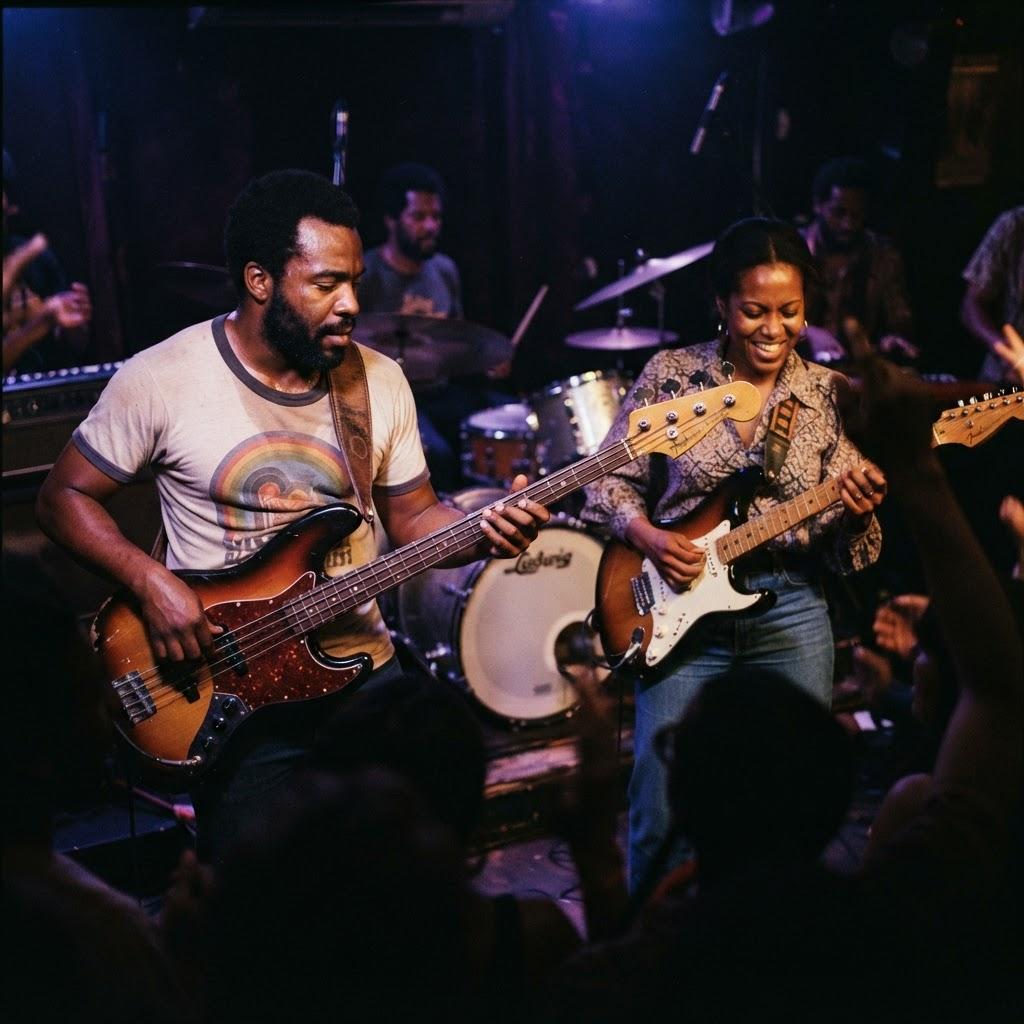
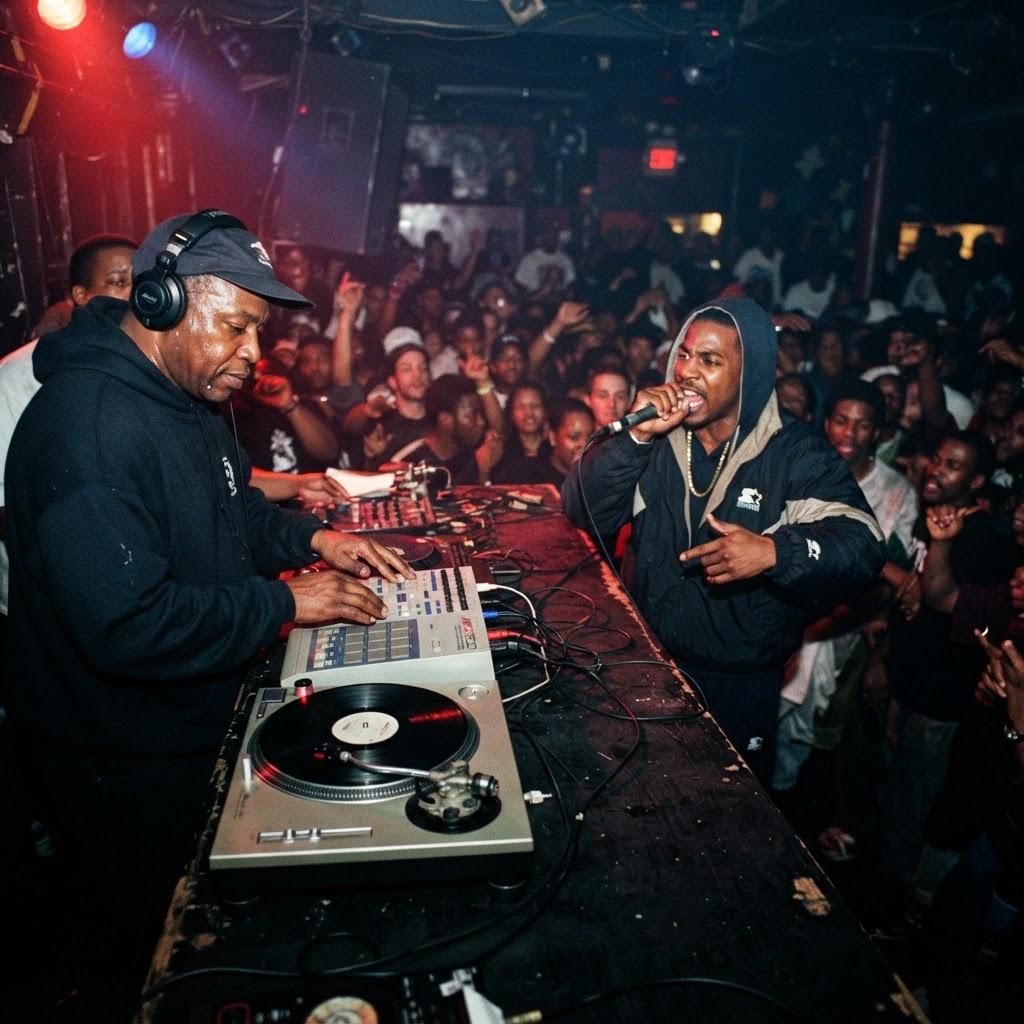
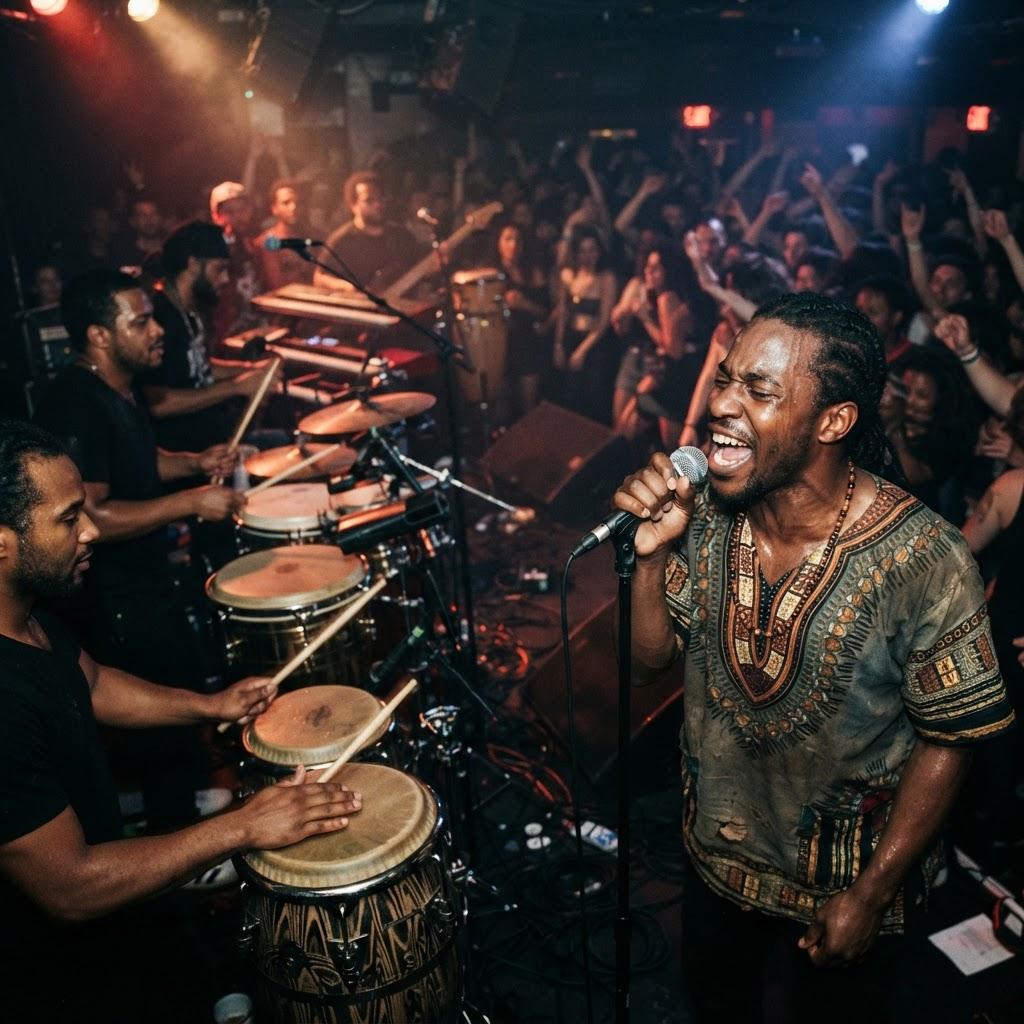
Imagine you are at a party that is so good, the DJ is physically barred from ever turning off the music, and the drummer has been possessed by the spirit of a thousand caffeinated jackrabbits. That is Go-Go. It is not just music; it is an atmospheric condition, a D.C.-born sonic tsunami that refuses to let you stand still. There are no awkward lulls here, no 'let us take a breather' ballads, and definitely no awkward pauses between songs. Go-Go is a continuous, sweat-drenched conversation between the band and the crowd, where the drummer acts as the conductor of a rhythmic religion. It feels like a block party that decided to move indoors and never, ever go home. When you hear the call of the cowbell and the thunder of the congas, your legs stop being yours and start moving entirely on their own volition. It is raw, it is unapologetically loud, and it is the heartbeat of a city that knows how to throw a party that lasts for eternity.
The Sound & Signature Elements
The secret sauce of Go-Go is the 'pocket,' which is a musician’s way of saying the groove is so tight it feels like it is wearing skinny jeans. The defining feature is the 'syncopated' beat, which basically means playing on the off-beats—those tiny moments between the main pulses that make your head bob like a bird. You have a drum kit, sure, but the real star is the percussion section, specifically the congas. Think of the conga player as the band's engine; without them, the whole thing loses its steam. Then there is the 'pocket beat,' a specific rhythmic pattern that repeats endlessly, creating a trance-like state that keeps the crowd moving until they collapse. Songs often flow into each other without a single second of silence, a technique known as 'continuous play.' The bass lines are thick enough to rattle your teeth, and the brass section—trumpets and saxophones—acts as a siren, wailing over the top to keep the energy levels somewhere near the stratosphere.
Origins & Birth of the Sound
In the 1970s, Washington D.C. was a city brimming with musical ambition but searching for its specific, gritty identity. While the rest of the world was busy disco-dancing in sparkly polyester, D.C. musicians like the legendary Chuck Brown were looking back at the roots of funk and soul, deciding that the music of the era was just too… polite. They started stripping away the frills, focusing instead on the percussive interplay that felt like a direct descendant of African drumming circles. It was born in the basements and the neighborhood clubs where the vibe was intimate and the competition was fierce. These musicians were tired of the 'stop-start' nature of typical concerts, so they began stringing songs together, creating a seamless loop of rhythm. It was a grassroots uprising against the polished, commercialized pop music of the time, favoring a sweat-soaked, authentic connection between the stage and the dance floor that felt like a warm, loud, and very percussive hug.
The Pioneers & Legends
You cannot talk about Go-Go without bowing down to the 'Godfather of Go-Go,' Chuck Brown. He was the architect who took the funk and gave it that signature D.C. percussive kick, proving that a guitar riff and a cowbell could create a bigger earthquake than any heavy metal band. Then there is the band Trouble Funk, who brought a raw, aggressive energy that felt like the musical equivalent of a street fight in the best way possible. Experience Unlimited, or E.U., took the genre to the masses with a polished sound that showed just how far these rhythmic experiments could travel. Each of these legends treated the stage not just as a platform, but as a pulpit, preaching the gospel of the groove. They were the ones who figured out that if you lock in a rhythm and keep it moving, you can hold an audience hostage in a state of pure, unadulterated joy for four hours straight. Their legacy is the foundation upon which every modern D.C. beat-maker stands.
Defining Tracks & Era-Defining Moments
If you want to understand the soul of the genre, you start with Chuck Brown and the Soul Searchers' 'Bustin' Loose.' It is the undisputed national anthem of Go-Go. When that cowbell starts, it is like a signal flare going off in the collective D.C. consciousness. Another titan is 'Da Butt' by E.U., which famously exploded into the mainstream via the movie 'School Daze' and turned the rest of the world onto the D.C. sound. These aren't just songs; they are cultural touchstones that carry the DNA of the neighborhood. 'Pump Me Up' by Trouble Funk is another heavy hitter, a song so driving and relentless that it could probably power a small city’s electricity grid for a week. These tracks matter because they define the 'Go-Go feeling'—that unique blend of street-smart attitude, irresistible rhythm, and the ability to make a crowded room move as one single, rhythmic organism. They are the tracks that separated the casual listeners from the true believers.
Subgenres & Offshoots
Go-Go is like a sturdy oak tree with a few wild branches that grew in unexpected directions. You have 'Bounce-heavy' Go-Go, which leans into the deeper, bass-driven elements, creating a sound that rattles windows three blocks away. There is also the 'Jazz-inflected' variety, where the horn players get a bit more experimental, showing off the city’s deep roots in the jazz tradition. You also see the 'Modern Pop-Go-Go' crossover, which mixes the traditional percussive elements with the synths and production styles of modern hip-hop. Some bands focused heavily on the 'call-and-response' vocal style, where the lead singer spends half the show conducting the crowd like a choir of rowdy, dancing angels. It is a genre that isn't afraid to borrow from its neighbors, stealing a bit of funk’s grit, some soul’s swagger, and the occasional electronic polish to make sure it keeps evolving while never losing that essential, percussive core that makes your heartbeat want to synchronize with the snare drum.
Cultural Impact & Influence
Go-Go is the soundtrack to life in Chocolate City. It has influenced everything from the local slang to the way D.C. teenagers express their identity. You can hear the ghosts of Go-Go in the music of countless hip-hop artists, who often sample that signature 'pocket' to add some D.C. flavor to their tracks. Beyond music, it has served as a powerful tool for social cohesion, acting as the glue that held neighborhoods together during tough times. The music has been a constant feature at protests, community festivals, and political rallies, because there is nothing quite like a Go-Go beat to turn a group of individuals into a unified, passionate force. It even sparked its own fashion culture, with specific styles of sneakers and hats becoming synonymous with the go-go scene. It is more than a genre; it is a regional dialect of the heart, a way of signaling to the world that you come from a place where rhythm is not just music, but a way of surviving and thriving.
Controversies & Drama
Like any good family gathering, Go-Go has its fair share of drama. The biggest wars are usually between the 'Purists' and the 'Innovators.' The purists argue that once you introduce too much synthesizer or electronic trickery, you aren't really playing Go-Go anymore—you are just playing pop music with a cowbell. Then you have the legendary 'Battle of the Bands,' which were less like friendly competitions and more like gladiatorial matches fought with brass and bass. Bands would try to out-play, out-groove, and out-talk each other, with the fans acting as the judges in a high-stakes arena of sound. There were also tensions between the old-school club scenes and the newer, younger crowds who wanted to push the tempo and experiment with the sound. These beefs weren't just about music; they were about heritage, pride, and who really knew how to keep the pocket tightest. It keeps the scene sharp, hungry, and constantly looking over its shoulder to make sure no one is slacking off.
Global Spread & Regional Scenes
While Go-Go will always be the crown jewel of D.C., its influence has rippled outward like a rock dropped in a pond. You can find pockets of Go-Go fandom in major East Coast cities, where D.C. transplants brought the party with them. Musicians in places like Baltimore and Philadelphia have taken the core rhythmic DNA of Go-Go and mixed it with their own local styles, creating unique hybrids that keep the tradition alive while adding new layers of texture. Even overseas, in places where the funk and soul scenes are obsessed with rare, authentic American grooves, you will find record collectors losing their minds over original D.C. pressings. It is not exactly a global pop phenomenon in the way that radio-friendly pop is, but for the true music nerds and dance floor veterans, it is a holy grail. The sound traveled because it was too infectious to stay trapped inside the city limits—the groove is simply too big to be contained by a state line.
The Modern Landscape
Today, Go-Go is in a fascinating state of evolution. It is not just a relic of the seventies; it is a living, breathing creature that is currently vibing with modern production techniques. You can find D.C. kids posting videos of street performances on social media, proving that the energy is just as raw as it was forty years ago. There is a concerted effort to preserve the history through museums and public initiatives, ensuring that future generations know exactly how the cowbell was struck. At the same time, producers are blending that signature Go-Go percussion with trap beats and ambient soundscapes, keeping the genre relevant for a generation that grew up on digital audio workstations. It is a beautiful mess of legacy and innovation, where you might see a veteran performer sharing a stage with a young artist who grew up listening to those old-school records on their smartphone. The pulse is still strong, the drums are still loud, and the party continues unabated.
How to Dive In
So, you are ready to let your hair down and get into the pocket? Excellent choice. Start your journey by putting on Chuck Brown’s 'Bustin’ Loose' and just let the cowbell do the talking—if your foot isn't tapping within ten seconds, you might want to check your pulse. From there, blast 'Da Butt' by E.U. to understand how the genre crashed the mainstream, then dive into the gritty, street-level intensity of 'Pump Me Up' by Trouble Funk. Don't worry about understanding every single note or rhythmic layer right away; Go-Go is felt in the gut long before it is understood by the brain. Look up videos of live performances to witness the call-and-response magic between the band and the crowd—that is where the soul of the genre truly lives. Keep your ears open for those syncopated percussion patterns in everything you listen to afterward, because once you have heard the D.C. beat, you start hearing it everywhere. Now, stop reading, crank the volume, and start moving!