1960s, Latin America and Spain
Latin Pop
Latin Pop is the glitter-drenched, hip-shaking hurricane of the music world that makes everyone feel like the protagonist of a telenovela. It is a high-octane cocktail of passion, rhythm, and melody that has conquered the globe one infectious hook at a time.
Meet the Genre
Latin Pop is the musical equivalent of walking into a room where everyone is already dancing, the drinks are perfectly chilled, and someone just whispered the best piece of gossip you have ever heard. It does not wait for an invitation; it kicks the door down with a shimmer of synthesizers and a beat that seems specifically engineered to bypass your brain and go straight to your hips. This is not music you listen to while staring at a spreadsheet; this is music you listen to while trying to remember how to live your best life in a crowded summer street. It carries the emotional weight of a thousand star-crossed lovers and the sunshine-soaked optimism of a never-ending beach vacation. You might hear it in the back of a taxi in Mexico City, a trendy nightclub in Madrid, or the grocery store in Des Moines, and in every instance, it acts as a universal solvent for bad moods. It is dramatic, it is undeniably polished, and it possesses a kind of rhythmic gravity that keeps the whole world spinning in time to a claved beat.
The Sound & Signature Elements
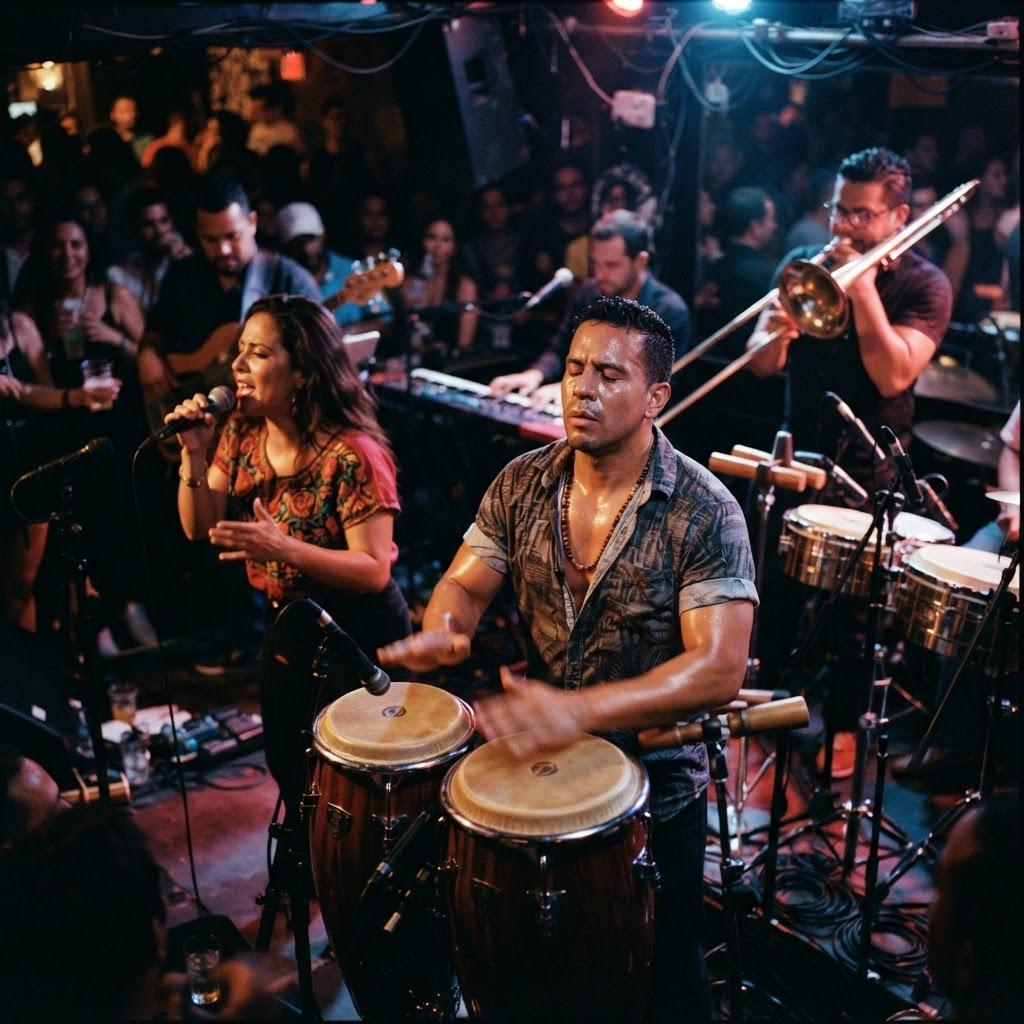
At its core, Latin Pop is a masterclass in balance, mixing the raw, earthy soul of Latin American percussion with the glossy, high-production standards of Western radio. Think of it as a fancy dinner party where the appetizers are traditional instruments like congas or guiros, and the main course is a massive, ear-worm chorus built on top of a punchy drum machine beat. The production style usually leans heavily into what music geeks call 'the wall of sound,' meaning everything is layered to perfection so that no matter how small your speakers are, the song sounds like it is taking up the entire room. Time signatures are almost always a straightforward 4/4 time, which is just a fancy way of saying a steady, foot-tapping count that feels like walking or dancing, nothing complicated or math-heavy. The secret sauce is the 'hook'—a melody so sticky that you will find yourself humming it three days later in the shower, wondering where it came from. Whether it is a soaring, romantic ballad or an upbeat dance-floor filler, the arrangement always prioritizes clarity, passion, and that subtle, syncopated rhythm—where the beat plays 'hide and seek' slightly off the main pulse—that gives it its signature Latin flavor.
Origins & Birth of the Sound
Long before the internet and global charts, Latin Pop was a wild, brewing storm born in the bustling urban centers of Latin America and the warm, artistic hubs of Spain. It did not have a single 'Eureka' moment; instead, it was a long, beautiful collision of influences. In the 1960s and 70s, you had artists who were fed up with the stuffy, traditional ways of making music and decided to take the beautiful, heart-wrenching melodies of the Bolero and combine them with the electric energy of rock and roll. It was a time of creative defiance, where musicians were smuggling in drum kits to complement traditional percussion and daring to make music that felt both local and global at the same time. These pioneers were operating out of cramped, smoky studios where they were constantly experimenting with how to make a classic love song sound like it could fit on a radio station in London or New York. It was a slow burn of cultural alchemy that started in the back alleys of cities like Buenos Aires and San Juan, fueled by the desire to modernize identity without losing the soul that made the culture so vibrant in the first place.
The Pioneers & Legends
If Latin Pop had a Mount Rushmore, the granite faces would be carved with the expressions of visionaries who managed to bridge the gap between niche folk traditions and global superstardom. Julio Iglesias, for example, brought a level of velvet-voiced sophistication that made the genre feel like it belonged in the most exclusive rooms of the world. Then there is the lightning bolt of energy that was Selena Quintanilla, a powerhouse who didn't just sing songs; she transformed the genre into a lifestyle, blending Tex-Mex influences with a pop polish that redefined what it meant to be a superstar. Figures like Gloria Estefan didn't just participate in the genre; they acted as a bridge, bringing a distinct Miami flavor that forced the American mainstream to sit up, pay attention, and dance. These artists were not just performers; they were cultural ambassadors who navigated the shark-filled waters of the music industry to ensure their sound wasn't just a trend, but a permanent fixture in the global music library. Their legendary status comes from the fact that they remained authentically themselves even when the suits in the industry were telling them to 'translate' their identity for a wider audience.
Defining Tracks & Era-Defining Moments
Every genre has those songs that act as a 'you are here' sticker on a map, and Latin Pop has a collection of tracks that changed the game forever. Think of 'Conga' by Miami Sound Machine, which basically grabbed the 80s by the lapels and forced it to acknowledge the power of a Cuban rhythm section. It wasn't just a song; it was a Trojan horse that successfully infiltrated American radio. Then you have the absolute phenomenon of Ricky Martin’s 'Livin' la Vida Loca,' a track that, upon release in 1999, acted like a cultural nuclear bomb. It shattered the 'crossover' barrier, making it clear that a Latin artist could dominate the charts without having to abandon their heritage or sound. Each of these moments represents a pivot point where the genre stopped being 'that music from over there' and became 'the music we all listen to.' These aren't just tracks; they are landmarks that prove how a singular song can dismantle prejudices and unite dance floors across every border, language, and continent imaginable. If you want to understand the history of this genre, you follow the breadcrumbs left by these specific, earth-shattering hits.
Subgenres & Offshoots
Latin Pop is less like a single tree and more like a sprawling, caffeinated jungle. Because it is so flexible, it constantly gets into flings with other genres, creating some truly wild offspring. You have 'Latin Ballad,' which is the brooding, emotional sibling who spends most of their time weeping beautifully over a piano. On the other end of the spectrum, you have 'Latin Dance,' which is the chaotic, strobe-light-loving sibling that only knows how to play at 130 beats per minute. Then there is the fusion territory where Latin Pop meets Reggaeton—a gritty, bass-heavy marriage that has taken over the world in the last decade. Don't forget the 'Latin Rock' variants, which bring in electric guitars with a chip on their shoulder and a lot more attitude. Each subgenre is just a different way of saying 'I love a catchy hook,' but with different textures and moods. It is this biological diversity that makes the genre impossible to kill, as it can adapt to whatever trends are happening in the broader music world, absorbing them into its own rhythm like a musical sponge.
Cultural Impact & Influence
The reach of Latin Pop extends way past the charts and into the very way the world dresses, speaks, and feels. It has essentially become the global soundtrack for celebration. When you hear that opening hook at a wedding, a birthday, or a sporting event, you are seeing the direct result of the genre's cultural dominance. It has forced the mainstream media to finally recognize the spending power and influence of the Latino diaspora, leading to more representation in film, fashion, and politics. Remember when Spanish phrases started popping up in non-Spanish pop songs? That is Latin Pop's influence radiating outward. It has normalized the presence of multiple languages in top-tier music, proving that you do not need to sing in English to have a global anthem. This genre has taught generations that joy is a universal language and that the rhythm of the Americas is a foundational part of the human experience. By simply existing and thriving, it has dismantled the idea that 'pop' has a single, narrow definition and expanded the world's definition of cool to include everything from the Caribbean to the Southern Cone.
Controversies & Drama
No genre this big gets through life without a little bit of back-stage, internet-fueled drama. The biggest source of friction is the age-old 'authenticity' debate. You have the purists who argue that once a song is produced for maximum radio play, it loses its soul, and it is no longer 'real' music. This is the classic 'sellout' accusation that has been leveled at just about every artist who has achieved massive success. Then there is the tension between regionalism and globalization—the fear that by appealing to a global audience, artists are diluting the specific regional flavors—like the difference between a Colombian vibe and a Puerto Rican vibe—into a generic 'Latin' soup that ignores the nuance of individual cultures. Sometimes there are even beefs between producers about who actually created a specific beat or rhythmic pattern, which is the musical version of arguing over who invented the sandwich. But at the end of the day, these arguments are mostly just signs of how much people care. It is passion, and in the world of Latin Pop, passion is the fuel that runs the entire machine, drama and all.
Global Spread & Regional Scenes
Latin Pop is a master of travel; it does not need a passport, it just needs a decent sound system. While it was born in the Americas and Spain, it has effectively colonized the rest of the world. In cities like Paris, Tokyo, and London, you can walk into a club and hear the same infectious hooks that are topping the charts in Bogota or Mexico City. This isn't just a case of music being exported; it is a case of music being adopted. Local scenes have popped up everywhere, where artists take the basic blueprint of Latin Pop and add their own local seasonings. For example, in Europe, you might hear a version that blends in more house music influences, while in other regions, it might fuse with indigenous folk instruments to create something entirely new. It is a feedback loop where the genre goes out, picks up new habits and slang, and comes back transformed, making it one of the few truly 'globalized' musical movements that feels like it actually belongs to everyone who dances to it.
The Modern Landscape
Today, Latin Pop is in the driver's seat of the entire music industry. It is no longer sitting at the kids' table; it is the one throwing the party. With the rise of streaming platforms and social media, a song can go from a local experiment in a bedroom in Medellín to a global hit in under a week. The barriers that once kept non-English music from topping the Billboard charts have been demolished, replaced by a digital world that values the 'vibe' over the language. Current artists are playing with genres in ways that would have made the pioneers' heads spin—mixing trap, EDM, and even folk music with a reckless, joyful abandon. It is a golden age where the production quality is higher than ever, and the creativity is overflowing. Whether it is a TikTok-friendly dance challenge or a deeply personal, genre-bending concept album, the modern landscape is a testament to the fact that Latin Pop is not just a genre; it is a permanent, living, breathing dominant force that isn't going anywhere anytime soon.
How to Dive In
Ready to jump into the deep end? You don't need a map, just a pair of headphones and an open mind. Start by listening to the absolute heavy-hitters to get a feel for the rhythm—find a 'Best of' playlist that covers the last thirty years to hear how the production evolved from the 80s drum machines to today's crisp, digital perfection. Don't be afraid to click on the 'suggested' tracks, because the algorithm is actually quite good at finding the hidden gems once you have a baseline. Look for songs by artists like Shakira, J Balvin, Juanes, and Natalia Lafourcade to get a wide spectrum of what this genre can do. If you feel like your feet aren't moving, you are doing it wrong; turn the volume up, let the bass rattle your windows, and just let the melody take over. The beauty of Latin Pop is that it is remarkably friendly to newcomers. There is no barrier to entry here, only an invitation to join the fun. So, hit play, lose yourself in the groove, and welcome to the party—it is going to be a wild ride.