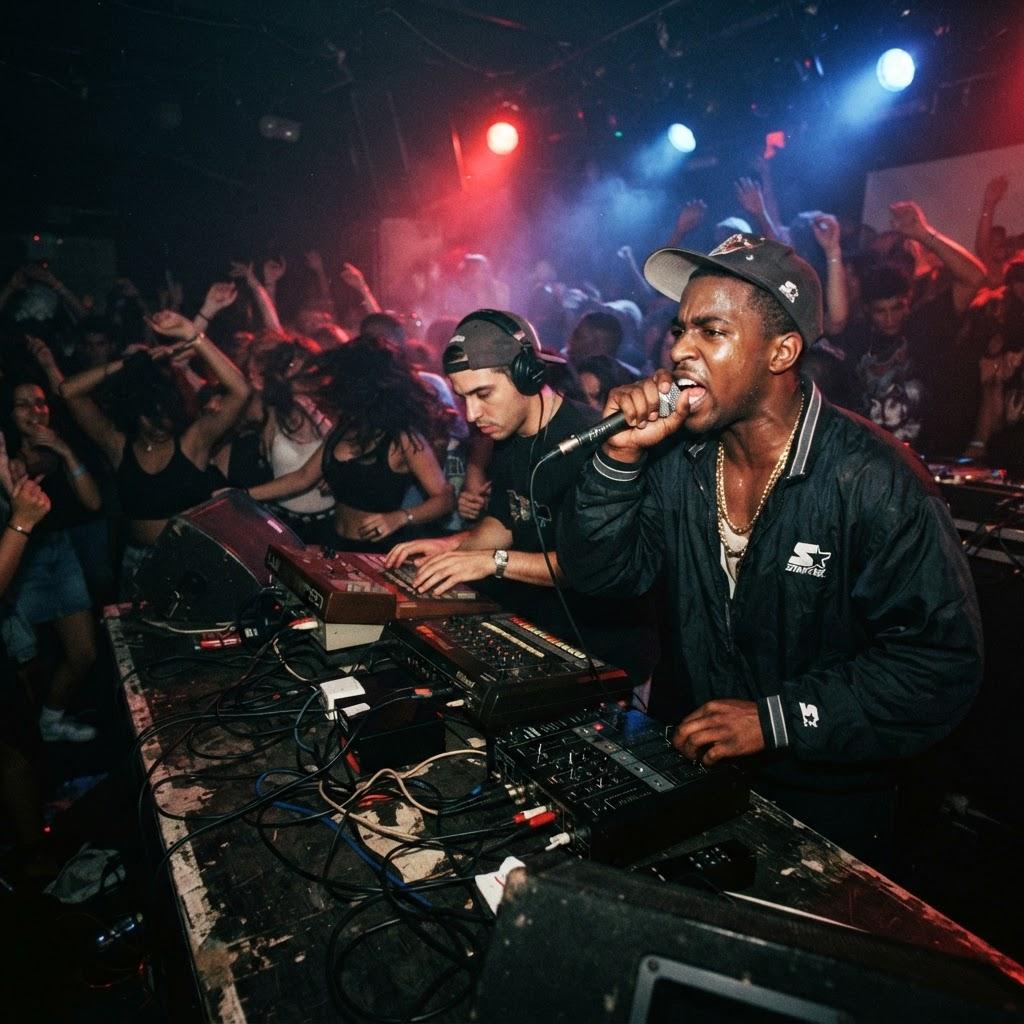
1980s, Miami, Florida
Miami Bass
Miami Bass is the sonic equivalent of a hydraulic lowrider doing a cartwheel on a sun-drenched beach. It is a high-octane, booty-shaking celebration that turned the trunk of a car into the most important concert venue in Florida.
Meet the Genre
Imagine walking onto a humid, neon-soaked Miami sidewalk in 1986. The air is thick enough to chew, the palm trees are swaying, and suddenly, a car cruises by with a sound system so powerful it rearranges your internal organs. That is the initial contact with Miami Bass. It is not just music; it is an aggressive, beautiful, and utterly relentless physical experience. This genre is the rebellious younger sibling of hip-hop that decided to skip the poetry slam to go do donuts in a parking lot. It is loud, it is proud, and it is obsessed with the physics of the bass drum. While other genres were busy being introspective, Miami Bass was busy trying to see how much sound pressure it could generate before the glass in a nearby shop window shattered into a million pieces. It is the sound of pure, unadulterated sunshine filtered through a distorted, overdriven subwoofer. It thrives on energy, it demands movement, and it absolutely refuses to take itself too seriously, prioritizing the rhythm of the street above everything else.
The Sound & Signature Elements
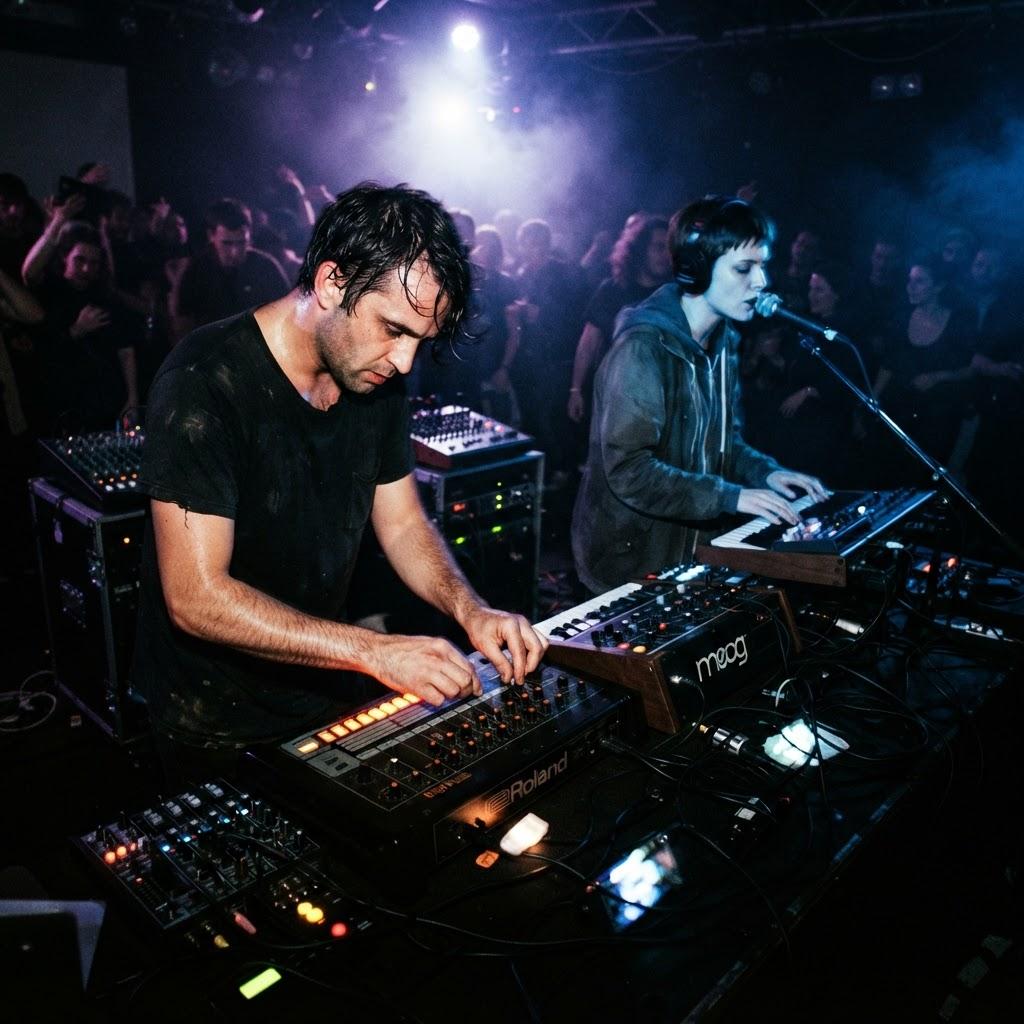
The heartbeat of Miami Bass is the legendary Roland TR-808 drum machine. To explain this to the uninitiated, imagine a robot that is really into kick drums. The 808 provides a deep, booming, resonant thud that does not just hit your ears; it hits your chest. Producers would take this sound and stretch it out, making it wobble and punch in ways that sound engineers probably never intended. The tempo sits usually between 120 and 130 beats per minute, which is the perfect speed for a high-energy dance or a very fast cruise down the highway. Another secret weapon is the 'vocoder,' a piece of gear that lets a human voice sound like a friendly cyborg. You will hear these robotic, high-pitched chants shouting out call-and-response lyrics that encourage everyone to get down or move their bodies. It is a formula, sure, but it is a formula designed for maximum impact. The song structures are simple—no complex symphonies here—just a beat that loops until the neighborhood hears it, topped with lyrics that are usually more about having a good time than saving the world.
Origins & Birth of the Sound
Miami in the early eighties was a melting pot of disco remnants, Caribbean rhythms, and the new, jagged edges of early rap coming up from New York. Local DJs in Miami were playing records from groups like Afrika Bambaataa, but they found the tempo too slow and the bass too polite for the local club crowds. These DJs started tinkering. They grabbed their drum machines and sped them up. They pushed the faders into the red—a technical term for playing music louder than the equipment is technically supposed to handle, which adds a crunchy, distorted grit to the sound. This wasn't happening in high-end studios with million-dollar microphones; it was happening in cramped bedrooms and smoky, sweltering clubs. It was a DIY revolution. The goal was simple: make the speakers thump harder than the club down the street. It was a competitive arms race of sound, where the only thing that mattered was how much furniture you could shake with your bassline. Out of this sweaty, humid crucible, a new, distinct flavor of bass-heavy music was forged.
The Pioneers & Legends
No conversation about Miami Bass is complete without a deep bow to 2 Live Crew. They were the architects of the controversy, the kings of the car audio circuit, and the reason parents in the eighties were clutching their pearls in horror. Led by the charismatic and outrageous Luther Campbell, or 'Uncle Luke,' they transformed the regional sound into a national phenomenon. Then you have the visionary DJs like Mr. Mixx, whose mastery over the scratching turntable and drum machine programming gave the genre its sharp, robotic edge. Other legends like Maggottron and Poison Clan pushed the boundaries of the 'booty music' aesthetic, creating tracks that were so rhythmically infectious they practically forced the human body to dance against its own will. These artists weren't just musicians; they were local icons who understood that the car stereo was a sacred space. They viewed their work as public service announcements for party-goers, dedicating their lives to the pursuit of the perfect, earth-shaking bass kick that could be heard from three blocks away.
Defining Tracks & Era-Defining Moments
When 'Me So Horny' hit the airwaves, it wasn't just a song; it was a cultural earthquake that rattled the foundations of censorship. It proved that Miami Bass could break through the radio gatekeepers, even if the lyrics made the censors have an absolute meltdown. Then there is 'Throw the D,' an anthem that perfectly encapsulates the genre’s commitment to pure, uninhibited dance floor energy. Another essential track is 'Planet Rock' by Afrika Bambaataa, which served as the blueprint for the electro-influenced beats that the Miami scene adopted and supercharged. Every track from this era feels like a time capsule of a specific, sweaty Florida night. These songs didn't just top the charts; they defined the sound of car stereos across the Southern United States. They were the tracks that sounded best when the windows were rolled down, the volume was cranked to the absolute limit, and the bass was so heavy it made the license plates on the cars behind you rattle.
Subgenres & Offshoots
The Miami Bass family tree is a bit like a wild, tangled mangrove forest. You have 'Booty Bass,' which is exactly what it sounds like—tracks explicitly designed to make the dance floor move in specific, high-velocity ways. It’s a rhythmic sub-genre that focuses on rapid-fire percussion and hypnotic, repetitive vocal samples. Then there is the 'Electro-Bass' side of the family, which leans heavier into the futuristic, sci-fi sounds of the synthesizers, sounding like a funky alien spaceship landing in a nightclub. There is also a strain of the music that merged with freestyle, adding more melodic hooks and emotional, dramatic vocal lines to the machine-gun beats. Some artists even ventured into 'Trunk Bass,' a sub-category dedicated entirely to the art of car audio competitions. In these tracks, the music isn't meant for headphones; it is designed to be played in an enclosed vehicle with custom subwoofers, aiming to test the structural integrity of the chassis while creating a low-frequency hum that you can feel in your teeth.
Cultural Impact & Influence
Miami Bass did more than just fill dance floors; it completely shifted the culture of the American South. It became the default soundtrack for the lowrider community, where custom car audio systems became a form of high art. The influence of the genre eventually spilled over into the mainstream, with major pop and hip-hop stars adopting the rapid-fire 808 patterns that originated in the Florida scene. The genre’s aesthetic—the bright colors, the neon lights, the sense of unrepentant fun—became synonymous with a certain version of the 'Miami lifestyle' seen in film and television. Furthermore, the genre's legal battles regarding censorship and free speech turned Miami Bass artists into unexpected heroes of the First Amendment. They fought for the right to play their music, and in doing so, they paved the way for artists in every other genre to express themselves without fear of the government pulling their records from the shelves. It was a massive victory for music as a medium of pure expression.
Controversies & Drama
If there is one thing Miami Bass loved more than a booming kick drum, it was a good fight. The most famous drama involved the legal crusades against 2 Live Crew’s albums, which were labeled as obscene by politicians and local authorities. It turned into a massive national debate about music, morality, and whether a government official has the right to decide what a drum machine is allowed to say. The artists were arrested, the records were confiscated, and the courtroom battles became as famous as the songs themselves. Beyond the legal stuff, there were the petty, classic hip-hop beefs. Producers would accuse each other of 'biting'—or stealing—their specific drum patterns or their unique way of programming the 808. There were wars over who held the title of the 'King of Bass,' and labels would constantly go to war over regional loyalty. It was a dramatic, chaotic, and often hilarious time where the intensity of the music spilled over into the real-world personalities of the creators.
Global Spread & Regional Scenes
While Miami was the mothership, the sound didn't stay trapped in Florida for long. It traveled up the coast and across the country like a bass-heavy shockwave. In places like Atlanta and Houston, producers took the Miami blueprint and added their own regional flavors, mixing in the slower, more soulful elements of their local scenes to create what would eventually evolve into the modern trap sound. Overseas, European dance producers became obsessed with the jagged, robotic textures of Miami Bass, incorporating it into their own early rave music. The beauty of the genre is that it is remarkably portable. You don't need a symphony; you just need a drum machine and a speaker that can handle a lot of vibration. This meant that local scenes in cities as far away as Tokyo or London could take the Miami Bass ethos—that focus on high-energy, speaker-shaking rhythm—and build their own localized versions of the party, keeping the heartbeat of the 808 alive across the entire globe.
The Modern Landscape
Today, Miami Bass is essentially the great-grandfather of modern electronic dance music and a massive chunk of today's chart-topping hip-hop. Every time you hear a trap beat with that iconic, sliding 808 bassline, you are listening to the distant echo of Miami in the eighties. The genre has moved from the basement to the festival stage. TikTok and other social media platforms have sparked a massive revival, with younger generations discovering the raw, high-tempo energy of the old-school tracks and incorporating them into their own viral dance challenges. While the pure, unadulterated 'classic' Miami Bass scene still exists in underground clubs and car meets, its influence is so widespread that it is almost invisible. It is in the DNA of everything from house music to pop radio. The spirit of the genre—that insistence on making the listener move their body—is more relevant today than ever before, proving that you can never truly kill a sound that hits that hard.
How to Dive In
Ready to get your windows rattling? Start your journey by listening to 2 Live Crew’s 'As Nasty As They Wanna Be'—it is the foundational text of the genre, raw and unapologetic. From there, move on to the classic compilation albums like 'The Best of Miami Bass,' which acts as a fantastic 'who's who' for the genre's pioneers. Don't skip tracks by Maggottron or the heavy, electro-infused sounds of Dynamix II. If you want to understand the production, look up tutorials on the Roland TR-808, and you will immediately see why that specific drum machine is the holiest piece of gear in the history of the genre. Put on a good pair of headphones—or better yet, find a set of speakers that can actually handle the low end—and just let the rhythm take over. There is no complicated philosophy to learn and no academic background required. Just turn the volume up until your teeth feel like they are vibrating, and you will officially be a part of the Miami Bass legacy. Happy listening, and try not to break anything!