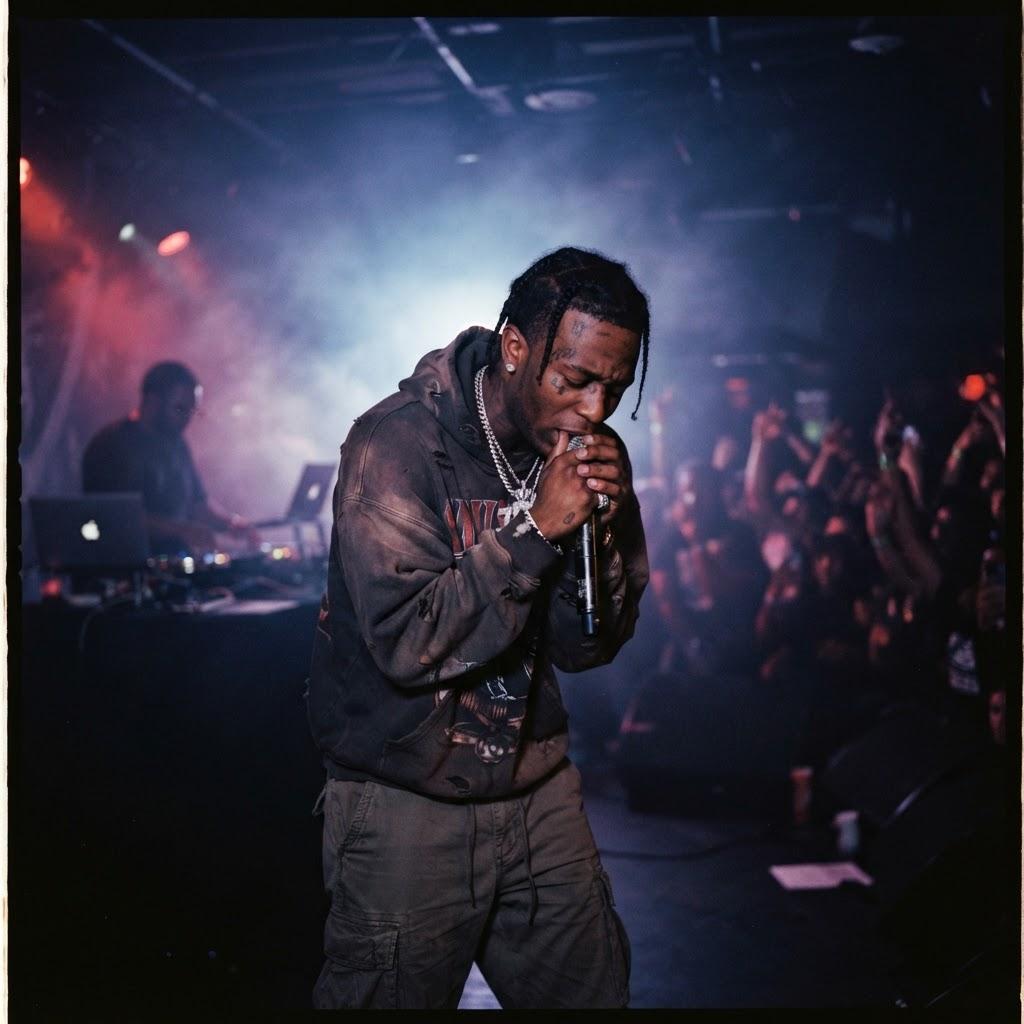
2010s, Atlanta, Georgia
Mumble Rap
Mumble Rap is the neon-soaked, lean-sipping, cloud-walking phenomenon that traded lyrical gymnastics for pure, unadulterated mood. It’s the sound of the internet generation finding rhythm in the slurred, the hazy, and the hopelessly catchy.
Meet the Genre
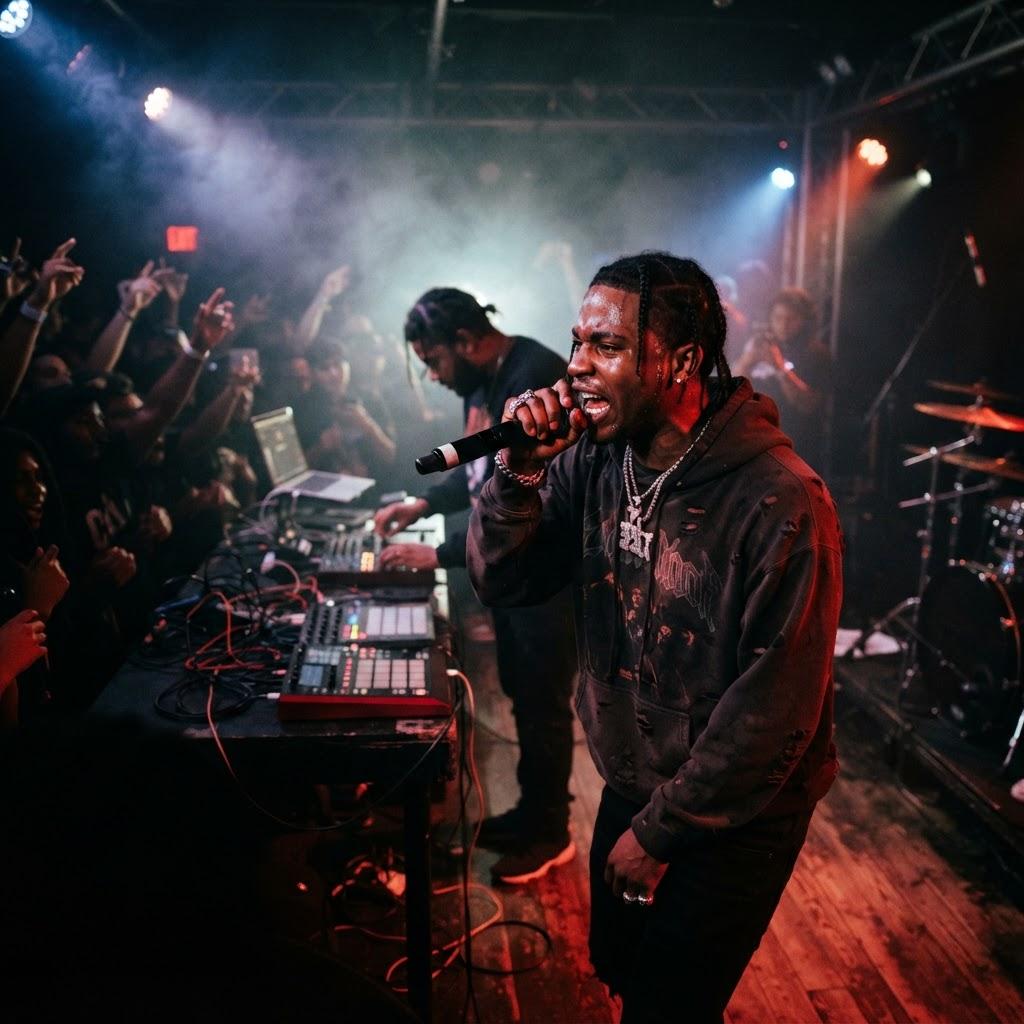
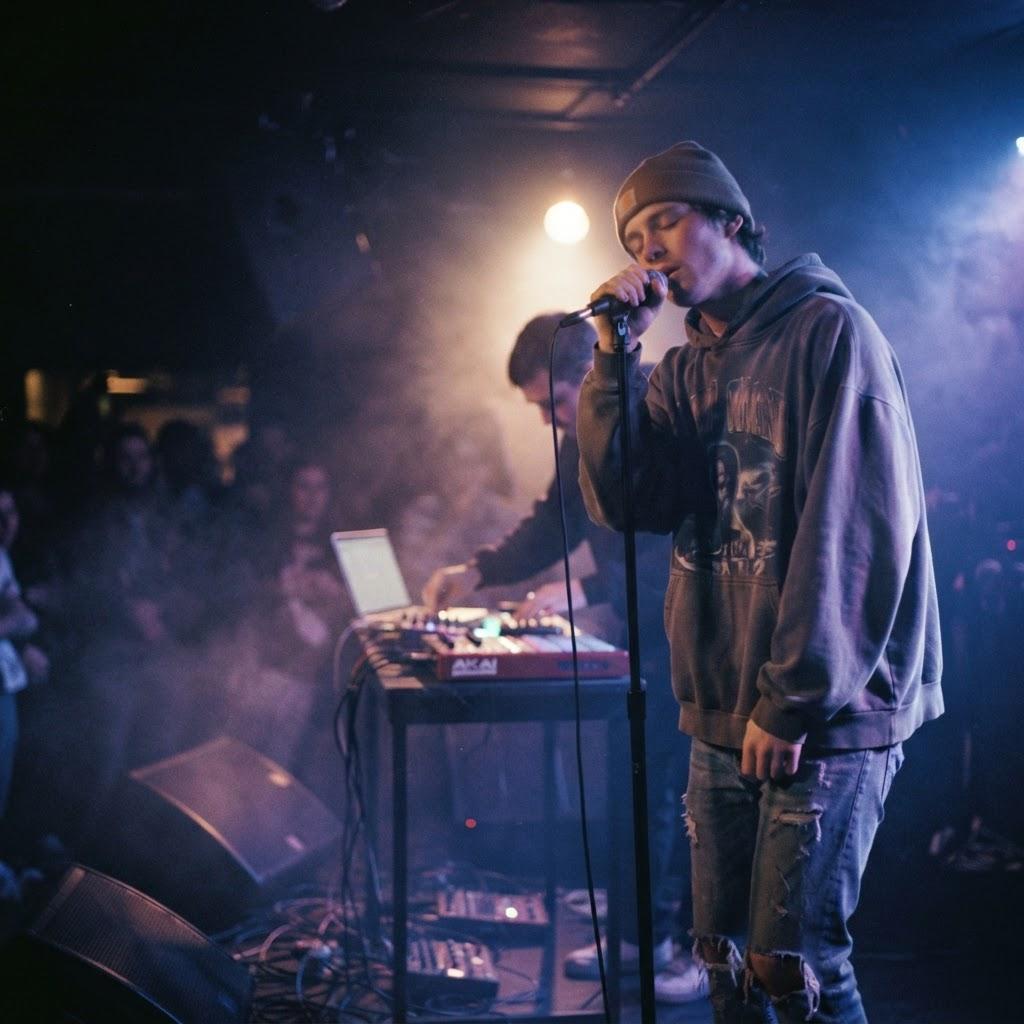
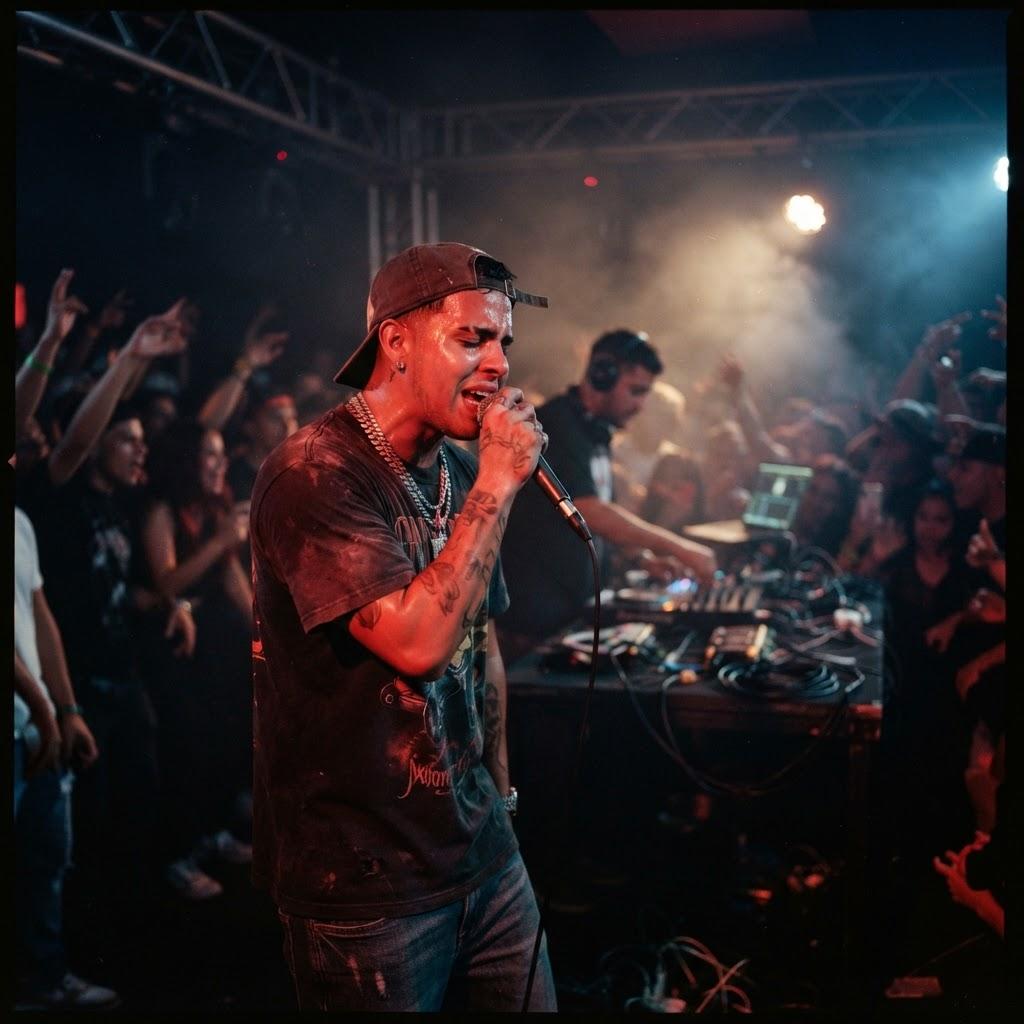
Imagine stumbling out of a dimly lit club at 4:00 AM, the bass still vibrating in your molars, while the neon streetlights blur into streaks of purple and gold. That is Mumble Rap in a nutshell. It is not trying to recite Shakespeare or solve complex social equations; it is here to make you feel like you are floating three inches off the pavement. It is the musical equivalent of a hazy dream where the melody is more important than the dictionary. You do not listen to Mumble Rap to learn; you listen to it to drift. The attitude is pure, unfiltered nonchalance. It is the sound of kids who grew up with the entire internet in their pockets, realizing they did not need to shout to be heard when they could just hum a hypnotic hook and change the world. It is raw, it is repetitive, and it is weirdly addictive. If you are looking for complex narrative arcs, you might be at the wrong party, but if you want to lose yourself in a sea of distorted 808s and mumbled mantras, you have come to the right place.
The Sound & Signature Elements
At its heart, Mumble Rap is a masterclass in mood-setting through digital wizardry. The foundation is the Roland TR-808, a drum machine that creates that deep, rattling bass that shakes your ribcage. When we say 808s, think of a bass note so low it feels like a physical punch. Then, you have the hi-hats—those tiny, metallic 'tiss-tiss-tiss' sounds that scurry around the beat like nervous spiders. The tempo usually hangs out in the mid-tempo range, often around 140 beats per minute, but it feels slower because of the heavy, dragged-out delivery. Auto-Tune is the secret sauce here. Rather than using it to make someone sound like a perfect pop star, producers use it to turn the voice into an instrument, stretching and warping notes until the human voice sounds like a lonely robot crying in a digital void. Song structures are often fluid; a verse might blend into a chorus so seamlessly that you don't even realize the hook has arrived until you are already singing it along with the artist, even if you are not entirely sure what the actual words are.
Origins & Birth of the Sound
The birth of Mumble Rap was less of a singular explosion and more of a digital creep. It crawled out of the basements and bedrooms of Atlanta, Georgia, during the early 2010s. Atlanta has always been the laboratory for Southern hip hop, but this specific mutation started when local artists stopped trying to be the next big lyricist and started trying to be the next big vibe. It was the era of the SoundCloud explosion, where a kid with a cracked laptop could upload a track at midnight and have a million listeners by sunrise. These creators were influenced by the slow, syrupy sounds of Houston chopped-and-screwed music, but they accelerated the energy and turned the technology up to eleven. There was no gatekeeper, no record label approval, just raw creative defiance. They were ignoring the old-school rules that said you had to rap fast or spit complex bars. Instead, they tapped into something primal, emotional, and undeniably catchy that resonated with a generation tired of the status quo.
The Pioneers & Legends
If Mumble Rap has a Mount Rushmore, it is carved out of granite and draped in designer streetwear. Future stands as the undisputed king, a man who figured out how to use Auto-Tune to express the kind of soul-crushing melancholy that hits you at 3:00 AM. His early work wasn't just rap; it was a diary written in code. Then you have Young Thug, the alien-voiced virtuoso who treats his vocal cords like a rubber band, stretching them into pitches that shouldn't exist in human biology. He broke every rule in the book by singing, yelping, and babbling his way to the top. Lil Uzi Vert brought a frantic, rockstar energy that bridged the gap between rap and pop-punk, jumping off stages and into the hearts of suburban teenagers everywhere. These weren't just musicians; they were modern-day myth-makers, crafting personas that were larger than life, fueled by eccentricity, unpredictable fashion choices, and an uncanny ability to turn a simple, slurred phrase into a global anthem.
Defining Tracks & Era-Defining Moments
Some songs are just lightning in a bottle, and in the world of Mumble Rap, those tracks didn't just top the charts—they shifted the tectonic plates of the entire music industry. Future’s 'Mask Off' is perhaps the most iconic example; that flute loop alone became a cultural meme that transcended the song itself. It proved that a mumble-heavy, hypnotic flow could be radio gold. Then there is 'XO Tour Llif3' by Lil Uzi Vert, a track that perfectly captured the angst and nihilism of the SoundCloud generation. It wasn't just a song; it was a anthem for every kid who had ever felt lonely in a crowded room. These moments were seismic. They taught the mainstream music world that the 'rules' of rapping didn't apply to the internet generation. Every time one of these tracks dropped, the bridge between underground niche and pop dominance grew smaller, proving that melody and feeling were the new currency in the rap game, regardless of whether you could transcribe the lyrics on the first try.
Subgenres & Offshoots
Once the seed of Mumble Rap was planted, it sprouted in a hundred different directions. You have the dark and moody 'Emo Rap' branch, epitomized by the late, great Juice WRLD, which infused the sound with genuine vulnerability and gut-wrenching lyrical themes about depression and heartbreak. Then there is the 'Pluggnb' scene—a softer, more ethereal cousin that focuses on dreamy, ambient synthesizers and a lighter, smoother vocal delivery that feels like floating through a video game dreamscape. There is also the 'SoundCloud Trap' style, which is faster, louder, and often features heavy, distorted basslines that sound like they were recorded inside a blender. Even regional scenes took the bait; the 'Florida Sound' added a punky, aggressive edge, while the 'UK Drill' scene borrowed the slow, ominous atmosphere of Mumble Rap and gave it a sharper, street-level bite. Each offshoot takes the core 'mumble' philosophy—prioritizing the vibe over the vocabulary—and applies it to a completely different emotional canvas.
Cultural Impact & Influence
Mumble Rap didn't just change the Billboard charts; it changed the way the world looks and talks. It birthed a fashion revolution, replacing baggy jeans with high-fashion labels, face tattoos, and hair dyed in every color of the fluorescent rainbow. It moved the needle on what is considered 'cool,' shifting the focus from the clean-cut rapper to the eccentric, expressive individual. The language changed, too; common slang, rhythmic patterns, and even the way people pronounce words shifted to match the cadence of these tracks. In film and media, we saw a move toward stylized, gritty visuals that matched the aesthetic of these artists—lots of quick cuts, low-light footage, and a general sense of being perpetually 'in the moment.' Even pop stars who had nothing to do with rap started adopting that 'slurred, atmospheric' vocal style in their own music. It proved that you didn't have to be a 'rapper' to be a part of the Mumble Rap cultural umbrella—you just had to share the attitude.
Controversies & Drama
Oh, the drama! Mumble Rap has been the target of every 'get off my lawn' rant from older generations since the day it arrived. The 'purists'—those who believe rap must involve complex, rapid-fire rhyme schemes and socially conscious narratives—viewed Mumble Rap as a tragedy. They saw it as the death of lyricism. The internet was a war zone for years, with 'Real Hip Hop' defenders squaring off against the new wave kids in comment sections that turned into digital boxing rings. It wasn't just about the music; it was about pride. Then there were the 'sellout' accusations every time a producer or artist experimented with a new sound or crossed over into pop. And let's not forget the backstage beefs, which were as predictable as they were petty, often played out entirely on Instagram Stories. It was a soap opera that provided constant entertainment, reminding us that no matter how much things change, the music industry will always have people arguing about what 'real' music is supposed to sound like.
Global Spread & Regional Scenes
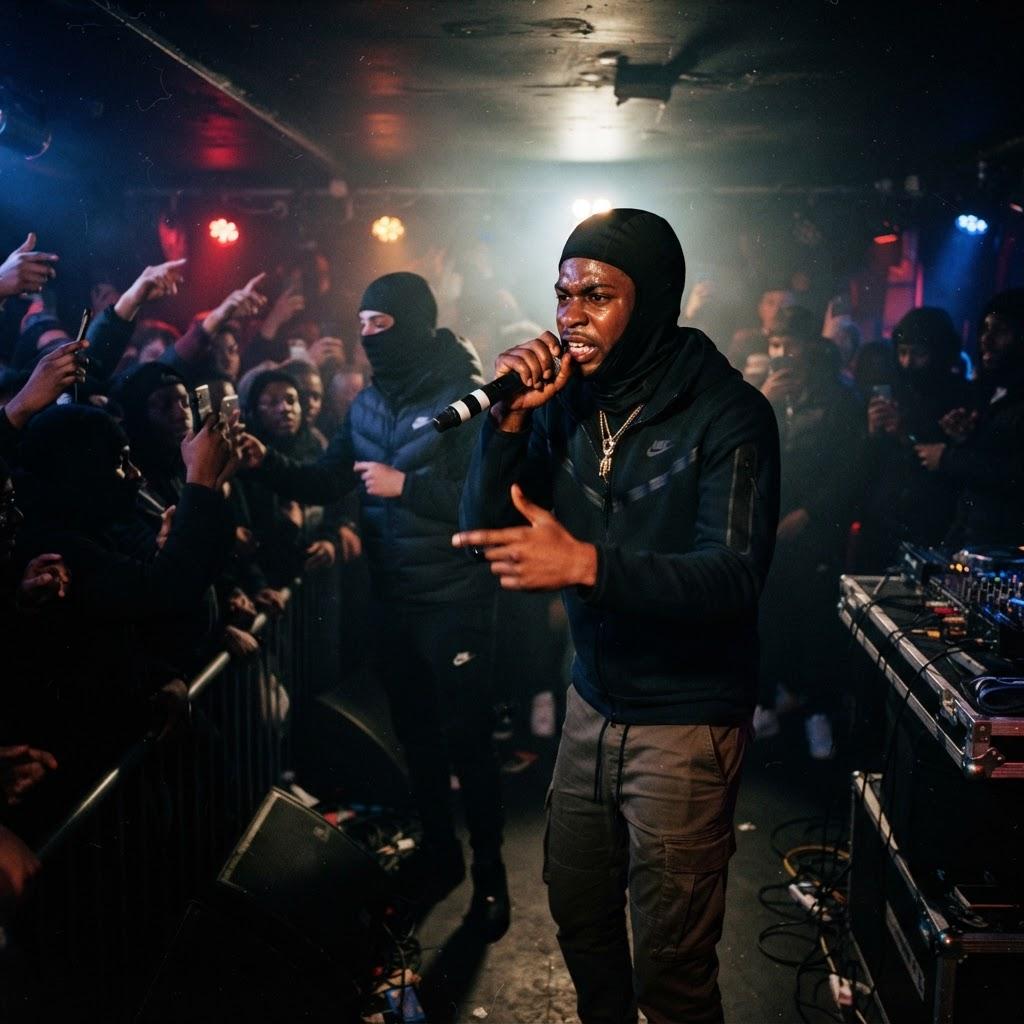
While Atlanta might be the cradle, Mumble Rap was adopted by the world like a long-lost sibling. In Europe, especially in the UK and France, artists took the 808-heavy template and infused it with their own local slang and cultural sensibilities, creating a sound that felt both global and intensely local. Japan became a massive hub for the genre, with Tokyo artists blending the aesthetic with high-tech, neon-drenched production that felt like it was plucked straight out of a cyberpunk anime. It spread through the internet like a digital virus—efficient, fast, and impossible to ignore. Each region brought a unique flavor; some emphasized the darker, more aggressive side, while others leaned into the pop-star quality of the melody. It proved that Mumble Rap wasn't just a niche American fad; it was a new global language of music that bridged borders because it prioritized the feeling of the sound over the specific dialect being spoken.
The Modern Landscape
Today, Mumble Rap has settled into the bedrock of modern music culture. It isn't a 'new' thing anymore; it is the standard operating procedure. Go look at the TikTok 'For You' page on any given day, and you will hear the DNA of Mumble Rap in almost every trending sound. The slurred delivery, the heavy Auto-Tune, the repetitive, ear-worm hooks—they are everywhere. The genre has evolved into something more polished, often crossing over into hyper-pop or electronic music, constantly reinventing itself to stay ahead of the curve. While some argue that the 'wild west' days of the early 2010s are over, the spirit remains. It is the go-to sound for anyone who wants to create an atmosphere, a mood, or a moment. It has successfully moved from the underground basements to the main stage of Coachella, proving that while it might have started by 'mumbling,' it ended up having quite a lot to say about the future of music.
How to Dive In
Ready to take the plunge into the hazy, bass-heavy abyss? Start by listening to Future’s 'DS2'—it is arguably the Bible of the genre, packed with enough atmosphere to fill a cathedral. Follow that up with Young Thug’s 'Jeffery,' which will show you just how far the human voice can be pushed before it snaps. If you want a taste of the more melodic, moody side, check out Juice WRLD’s 'Goodbye & Good Riddance.' From there, let the algorithm be your guide. Search for playlists labeled 'SoundCloud Rap' or 'Trap Moods' and just let the tracks wash over you. Don't worry about understanding every word; if you feel like you are floating in a neon-colored sea of sound, you are doing it right. Turn the bass up as high as your speakers can handle, dim the lights, and just embrace the vibe. Mumble Rap is not a history lesson; it is an experience, and the best way to enjoy it is to quit thinking and start feeling the rhythm.