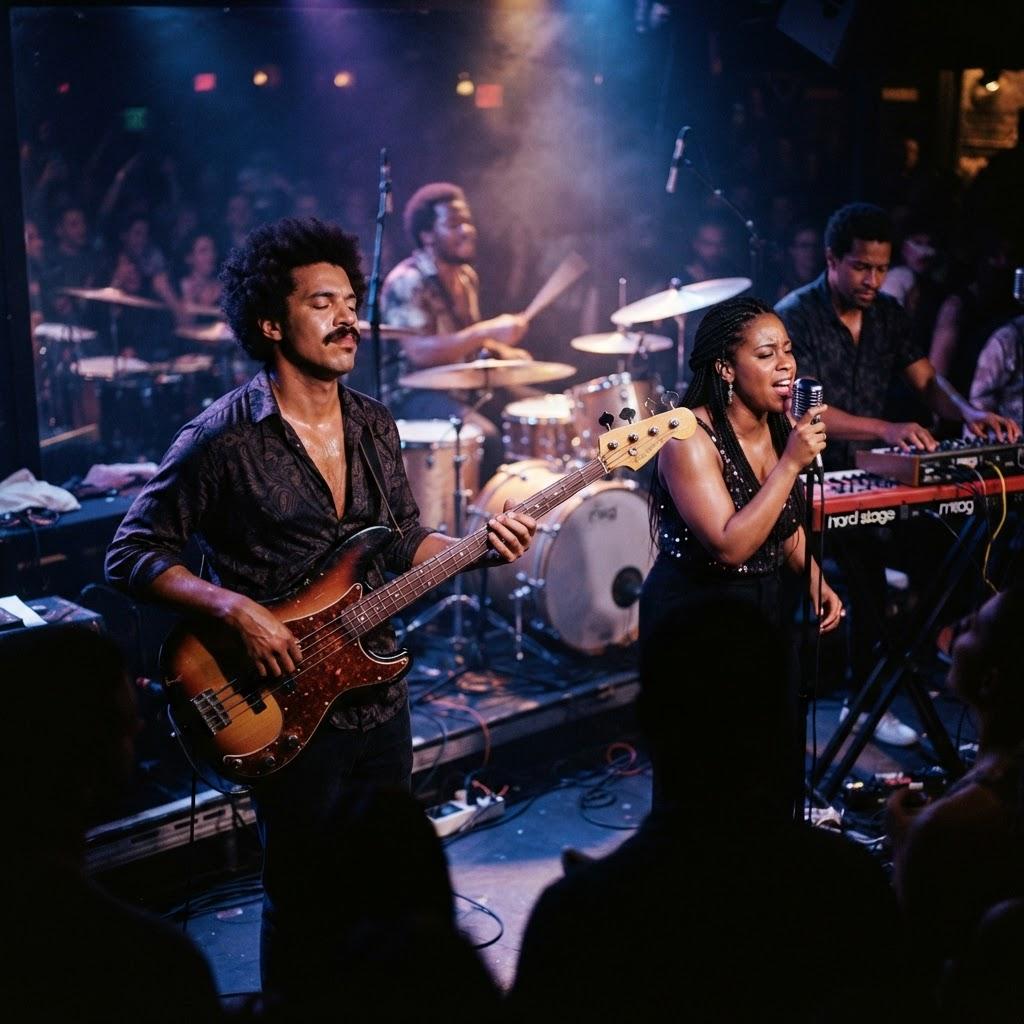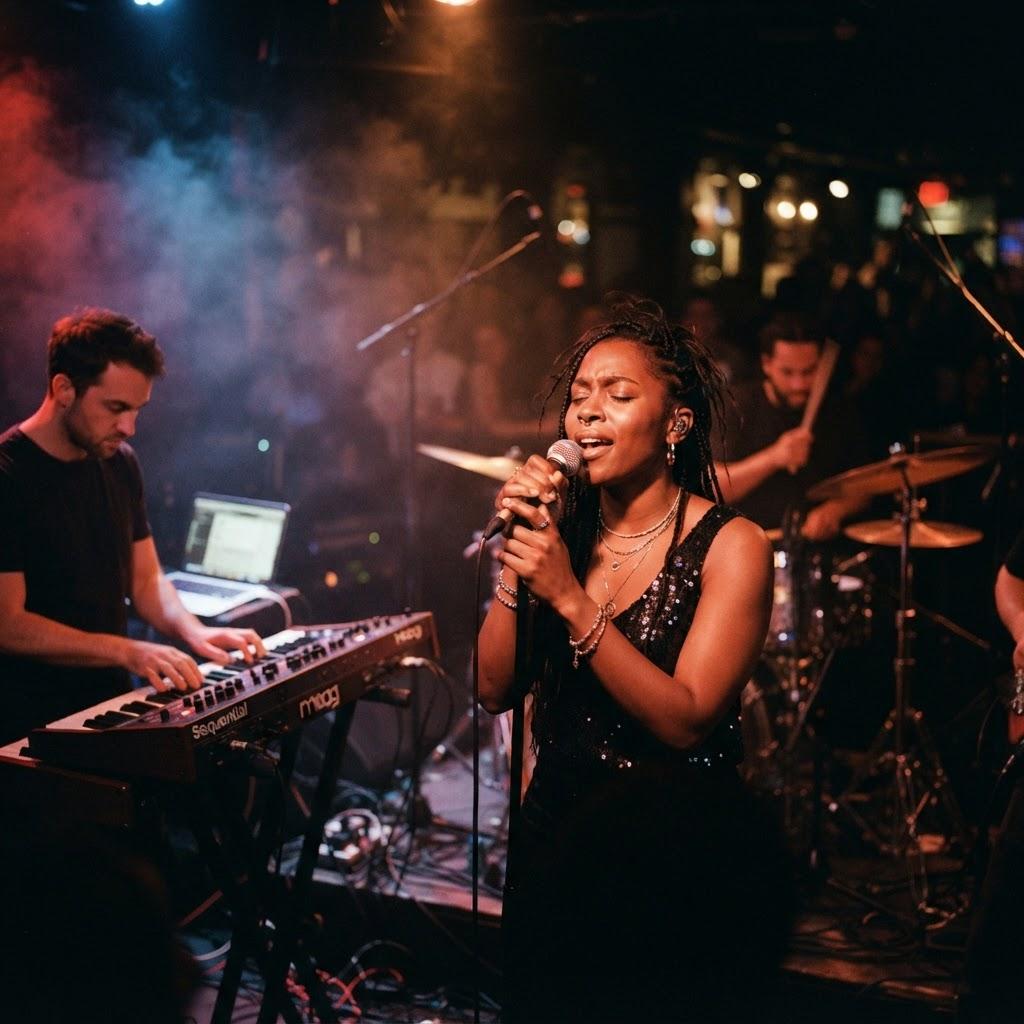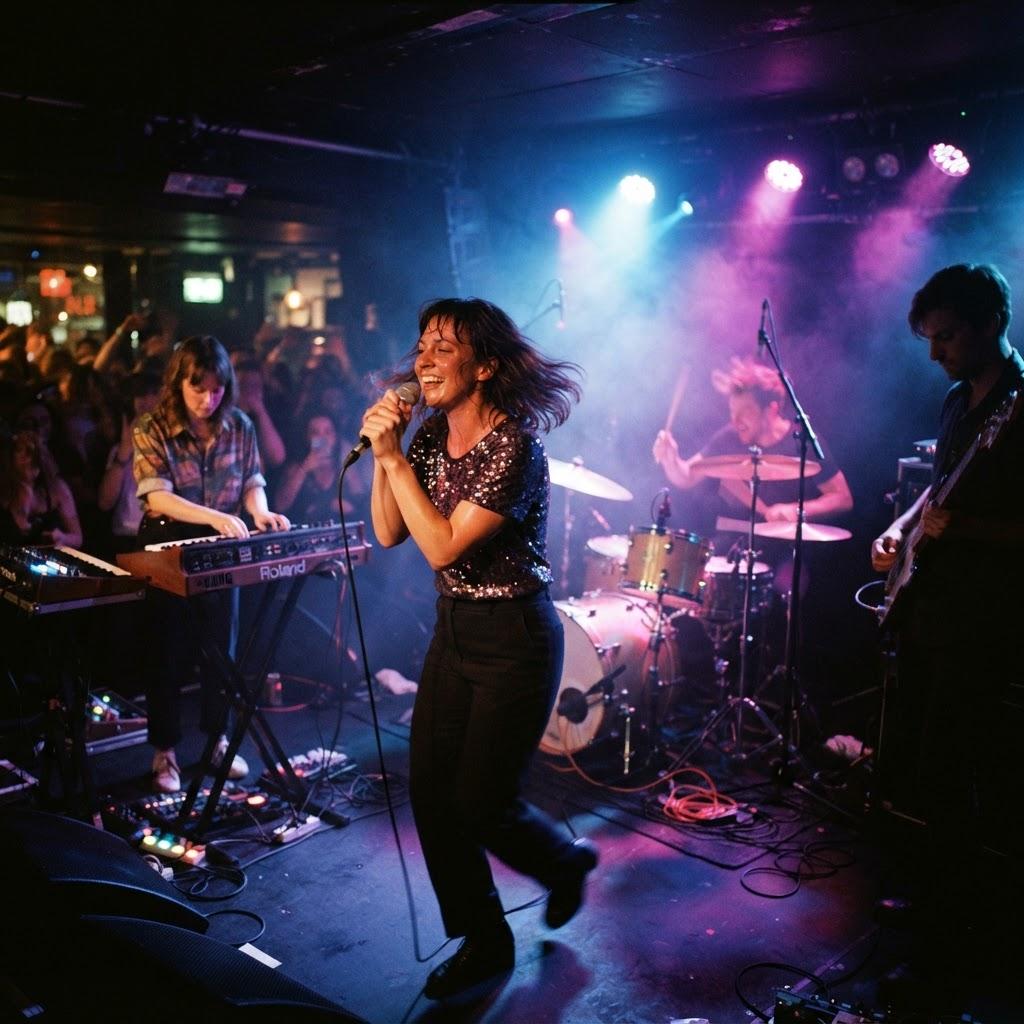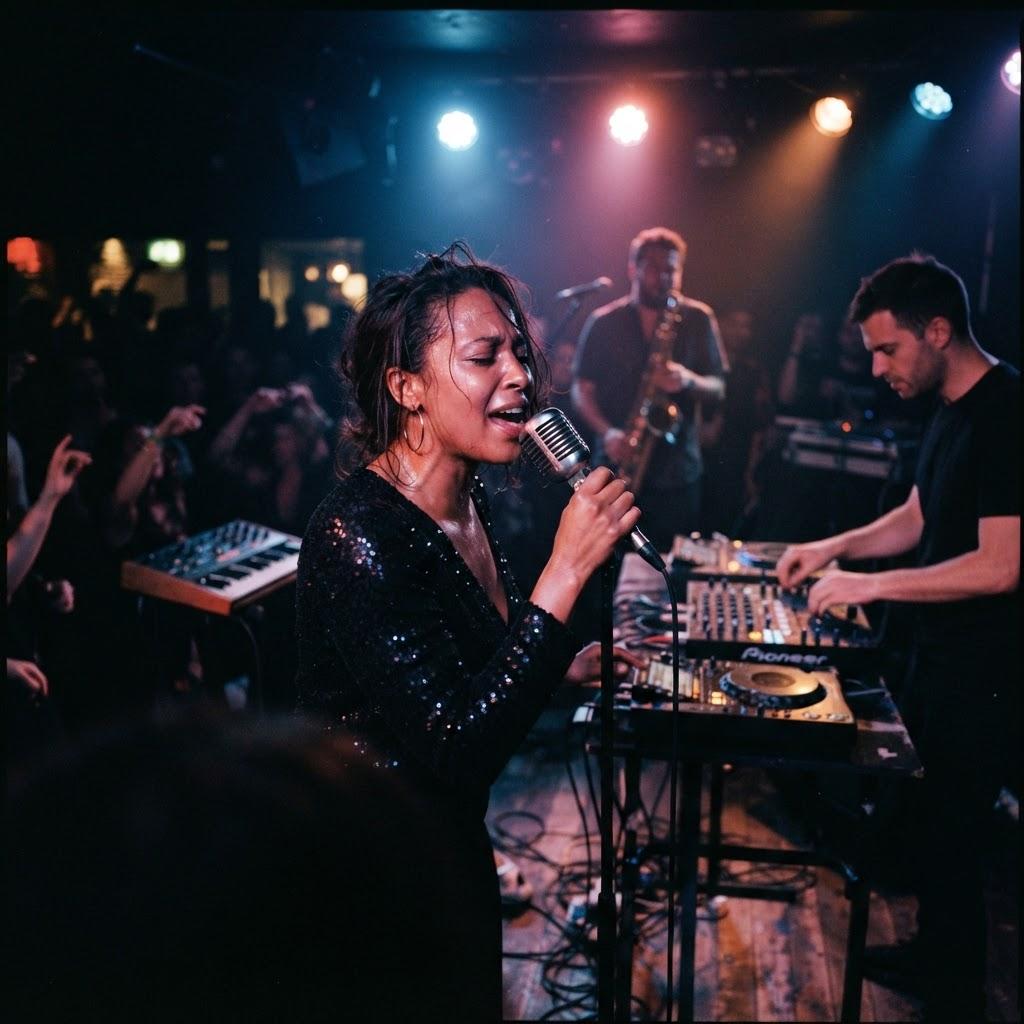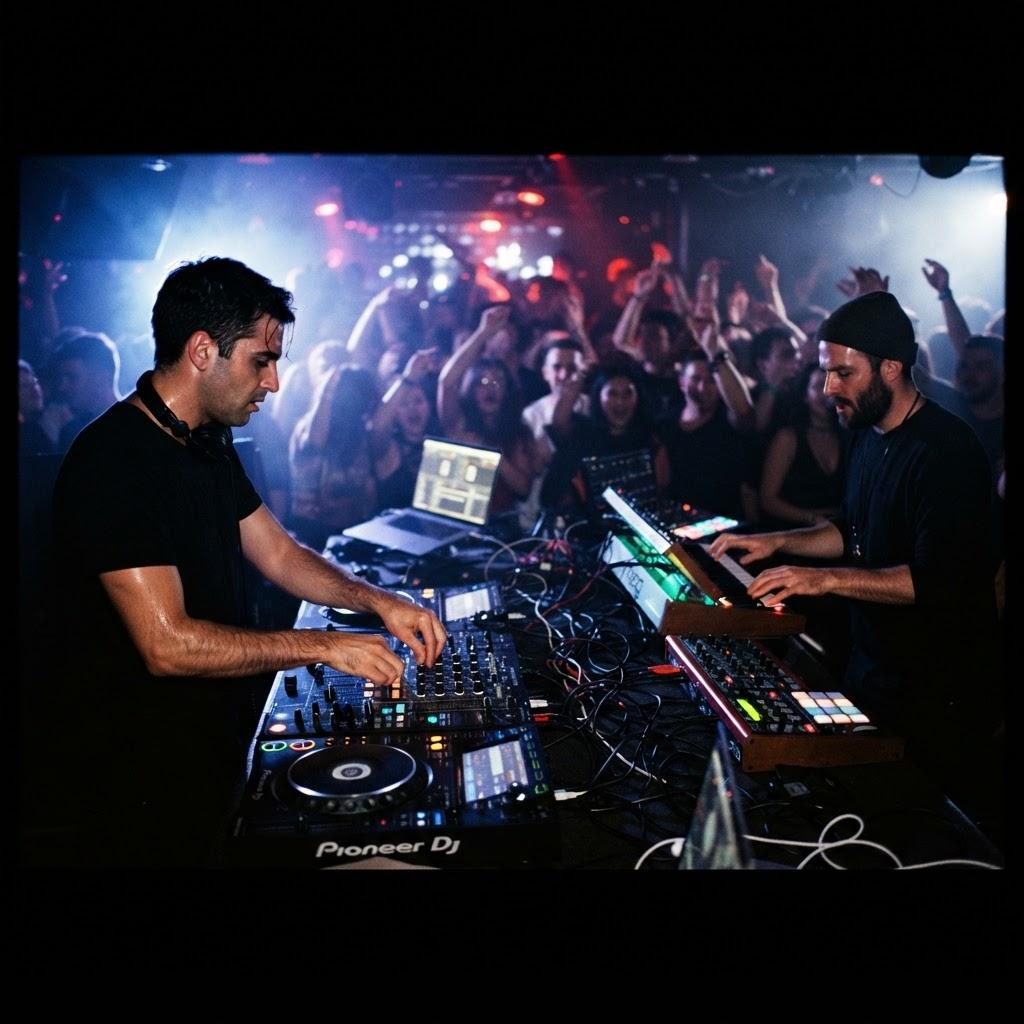
1980s, Chicago and Detroit, USA
EDM
EDM is the ultimate sonic sugar rush that turned underground basement raves into global stadium-shaking spectacles. It is the art of making electricity dance, sweat, and absolutely lose its mind until the sun comes up.
Meet the Genre
Imagine your heartbeat, but instead of the usual thump-thump, it is hooked up to a turbo-charged battery that loves strobe lights and neon spandex. EDM is not just a genre; it is a full-scale sensory assault that demands you stop worrying about your tax returns and start moving your feet. It is the musical equivalent of jumping into a ball pit made of pure kinetic energy. The attitude here is rooted in something called PLUR—Peace, Love, Unity, and Respect—though it occasionally feels more like 'Please Let Us Reach the Bar Before the Next Bass Drop.' Whether you are listening to a cavernous arena anthem or a grime-caked underground loop, the emotional fingerprint is always the same: a frantic, desperate, and beautiful reach for the infinite. It is loud, it is proud, and it is usually happening while someone is wearing oversized furry boots. If you have ever felt like the world was a little too quiet, EDM is the glorious, pulsating antidote that turns the volume knob until it snaps off.
The Sound & Signature Elements
At the core of every EDM track lies the 'four-on-the-floor' kick drum—a steady, rhythmic thump that lands exactly on every single beat. Think of it as a metronome designed for people who have had too much espresso. The secret sauce is the synthesizer, an electronic instrument that can sound like anything from a bubbling alien stream to a chainsaw cutting through sheet metal. Producers use these in Digital Audio Workstations, which are basically video game consoles for making music. You will hear the 'riser,' which is a sound that gradually gets higher and louder to trick your brain into thinking something epic is about to happen, followed by the 'drop.' The drop is the moment where the tension finally snaps, the bass kicks in, and the entire dance floor collectively loses its marbles. It is a simple formula—tension and release—but when it hits right, it feels like the air in the room is vibrating at the exact same frequency as your soul.
Origins & Birth of the Sound
Before it was filling stadiums, EDM was a scrappy kid hiding in the basements of Chicago and the warehouses of Detroit. In the early 1980s, disco had been declared dead by people in suits, so the marginalized kids in these cities decided to kill it twice and build something faster in the rubble. In Chicago, DJs started taking disco records and layering them with drum machine beats, creating 'House' music—named after The Warehouse, the club where it all bubbled up. Meanwhile, in Detroit, the local kids were obsessed with weird, futuristic European electronic music, blending it with funk to create 'Techno.' They were using machines that were basically glorified calculators to make sounds that felt like the future arrived early. This was defiance in the form of rhythm. These pioneers weren't trying to sell records; they were trying to create a sonic escape hatch from the monotony of the industrial grind, using cables, synths, and pure, unadulterated imagination to rewrite the rules of what a party could be.
The Pioneers & Legends
To understand the titans of this world, you have to look at the visionaries like Frankie Knuckles, the 'Godfather of House,' who could mix genres better than a chemist mixes isotopes. He turned mundane dance parties into spiritual experiences. Then there are the Belleville Three in Detroit—Juan Atkins, Derrick May, and Kevin Saunderson—who basically looked at a drum machine and realized they could invent a whole new musical language. They weren't just producers; they were futurists wearing headphones. Then came the era of the 'Superstar DJ,' with figures like Carl Cox, whose ability to play three turntables at once felt less like DJing and more like black magic. These pioneers were the architects of the rave scene, turning dingy clubs into cathedrals of sound. They didn't have fancy plugins or cloud-based software; they had grit, a few MIDI cables, and a vision that was about ten years ahead of everyone else's schedule. Their legacy is the very fabric of every beat you hear today.
Defining Tracks & Era-Defining Moments
If you want to know what the turning point of this genre feels like, look at 'Your Love' by Frankie Knuckles. It sounds like a ghost singing through a neon tunnel, and it is still the gold standard for late-night house music. Then there is 'Strings of Life' by Derrick May, a track so explosive that it basically convinced the entire world that electronic music was here to stay. Later on, Daft Punk arrived with 'Around the World,' taking the repetitiveness of dance music and turning it into a high-art loop that was as catchy as a common cold but infinitely more stylish. These songs aren't just tracks; they are cultural touchstones. They represent the moments where the genre shifted from 'something weird playing in the dark' to 'the main event.' When these tracks drop, the crowd doesn't just dance—they commune. They represent the DNA of the modern rave experience, capturing that ephemeral feeling of being part of something larger than yourself.
Subgenres & Offshoots
The EDM family tree is basically a sprawling, chaotic vine that grows in five directions at once. You have Trance, which is the emotional, weeping-in-the-raindrops cousin that loves massive, soaring melodies. Then there is Dubstep, the moody, aggressive sibling that loves to wobble and growl like a metallic monster with a bad attitude. Don't forget Drum and Bass, which treats rhythm like a high-speed chase through a rainy city, with drums moving at a pace that requires you to be an Olympic athlete just to keep up. There is also Ambient, the quiet cousin who sits in the corner and talks about the universe, and Hardstyle, the cousin who clearly drinks too much energy drink and wants to punch the air until the sun goes down. Each of these subgenres serves a purpose: whether you want to drift off into a trance-induced meditation or want your ribs rattled by a bassline that has clearly been working out, there is a branch for every possible mood.
Cultural Impact & Influence
EDM didn't just stay in the clubs; it infected the entire world. It redefined what we consider a 'pop song,' with top-tier artists like Rihanna and Beyoncé integrating electronic drops into their biggest hits. The fashion world caught on too, moving from baggy rave pants to the glitzy, neon-splashed aesthetics you see at massive festivals like Coachella or Tomorrowland. But its real influence is in the language of the modern internet. Every time you hear a synth-pop beat in a commercial or a heavy bass drop in a movie trailer, you are hearing the ghost of rave culture at work. It also turned 'the DJ' into the new rockstar. Before EDM, the person in the booth was just the guy playing the songs; now, they are the ones commanding an arena of fifty thousand people with the flick of a fader. The genre essentially turned every music listener into a participant, moving the focus from the band on stage to the collective energy of the crowd.
Controversies & Drama
Oh, the drama! The EDM world has seen more beef than a butcher shop. For years, there was a massive 'purist war' between the underground techno heads, who thought their music was serious art, and the mainstream festival lovers, whom they accused of just chasing the 'drop' like toddlers chasing candy. Then came the 'EDM Sellout' accusation, where every time a producer made a hit that played on the radio, the internet would collectively scream that the genre had died. There was also the infamous 'press-play' controversy, where people accused certain superstar DJs of just hitting a button and waving their hands while a pre-recorded mix played in the background. It was hilarious, petty, and entirely predictable. But this friction is what kept the scene alive. Every time someone complained about the music becoming too commercial, ten more underground artists popped up in basements to make something even weirder and more challenging just to prove the 'real' music was still thriving.
Global Spread & Regional Scenes
While Chicago and Detroit were the nursery, the world was the playground. The UK grabbed house and techno and turned it into the Rave scene of the 90s, essentially making it a national obsession. Then you have the Netherlands, which basically turned dance music into a high-octane engineering project, leading the charge in everything from Trance to Hardstyle. Brazil took house music and mixed it with local percussion to create baile funk, a rowdy, infectious offshoot that sounds like the biggest street party you have ever attended. In Tokyo, the scene turned into an exercise in precision and aesthetic, with clubs that sound clearer than a surgical operating room. Every region that touched EDM added its own local flavor, whether that meant incorporating traditional folk instruments or turning the tempo up until it was physically impossible to stand still. It is a truly global conversation conducted in the universal language of bass and synthesizers.
The Modern Landscape
Today, EDM is the undisputed king of the streaming charts and the engine behind almost every viral TikTok trend. It has fully matured into a massive, multi-headed industry, but it has not lost its weirdness. In fact, the lines between 'experimental underground' and 'pop radio' are blurrier than ever. You have producers who are just as comfortable remixing a nursery rhyme for a meme as they are creating an hour-long, avant-garde soundscape for an art gallery. The modern landscape is all about accessibility—thanks to software that allows anyone with a laptop to become a producer, the barrier to entry has vanished. This means we are currently drowning in an absolute deluge of new sounds. Some of it is cookie-cutter, but a lot of it is brilliant. It is a Wild West where the rules change every week, and the only constant is that there is always something new waiting just one click away in the algorithm.
How to Dive In
So, how do you jump into this sonic ocean without drowning in a sea of confusing subgenres? Start by listening to the pillars. Put on Daft Punk's 'Discovery' for that perfect blend of house and pop, then move to Aphex Twin if you want to see how far the brain can be stretched by electronic sound. For that classic, sweaty rave energy, find a classic Frankie Knuckles mix. If you want something that feels like the future, dive into the discographies of artists like Burial or Disclosure. Don't worry about understanding the theory or knowing the difference between a sub-bass and a lead synth; just listen for the movement. If your head starts bobbing, you are doing it right. If you find yourself looking up tickets for a festival in a city three states away, you are definitely doing it right. Just hit play, turn the volume up until your neighbors start complaining, and let the electricity take the lead. Welcome to the rave!