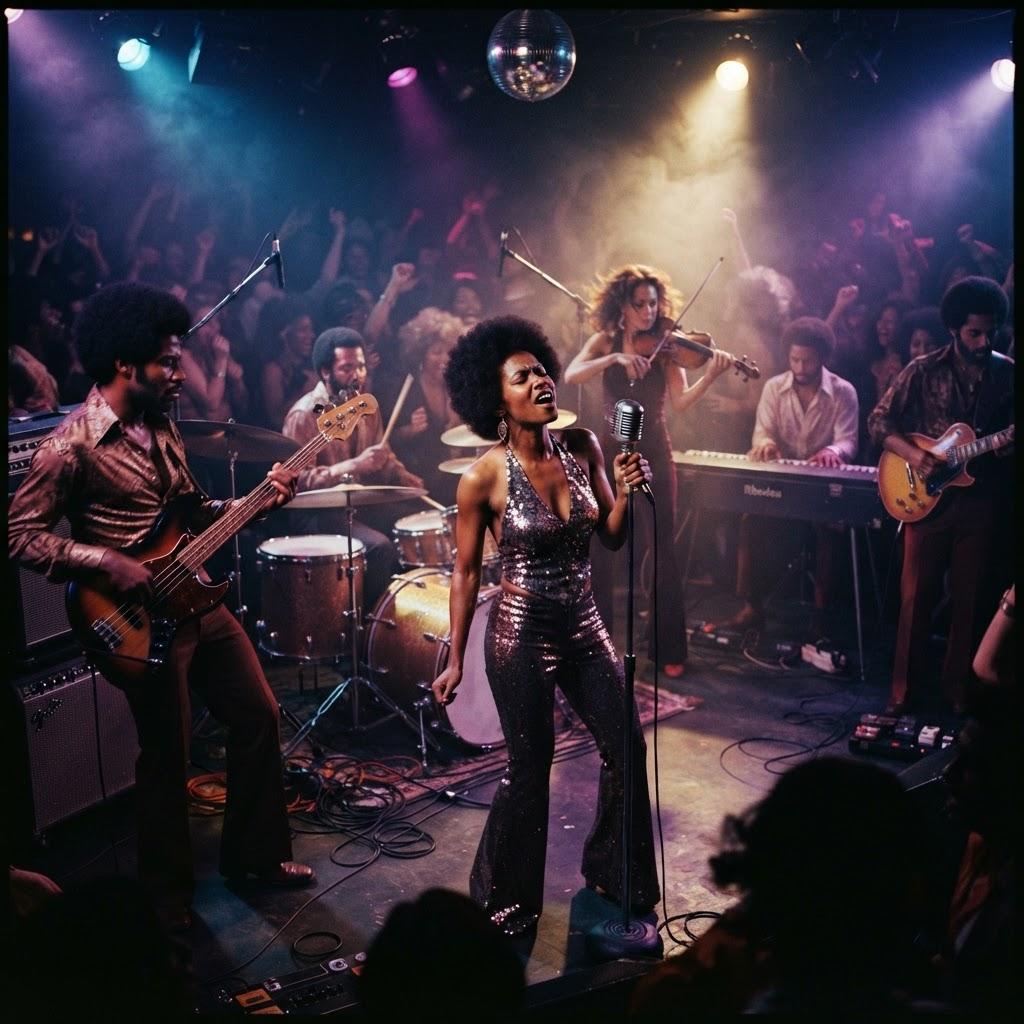
Late 1960s and 1970s
Funk Rock
Funk Rock is the sonic equivalent of a neon-colored lightning bolt hitting a dance floor in a leather jacket. It is the glorious, sweat-drenched collision where tight, rhythmic grooving meets the reckless, guitar-shredding rebellion of rock.
Meet the Genre
Imagine you are at a party where a classically trained ballet dancer decides to have a wrestling match with a heavyweight boxer, but instead of fighting, they accidentally invent a new way to move. That is Funk Rock. It is the genre that refuses to choose between being the coolest person in the club and the most rebellious soul in the alleyway. When you hear that opening thrum of a bass guitar that sounds like it is being slapped with a wet noodle and a crisp, punchy snare drum hit that cuts through the static like a laser beam, you know you are in for a ride. Funk Rock isn’t just music; it is an attitude adjustment. It brings the swagger of James Brown into the garage with Led Zeppelin, resulting in a sound that makes your shoulders move involuntarily. It is the high-octane intersection of grit and groove, where the rhythm is so tight you could bounce a quarter off it, but the guitar is screaming like it just stole a motorcycle. If you are looking for music that demands you tap your foot while simultaneously contemplating how to overthrow the government, you have arrived at the right place.
The Sound & Signature Elements
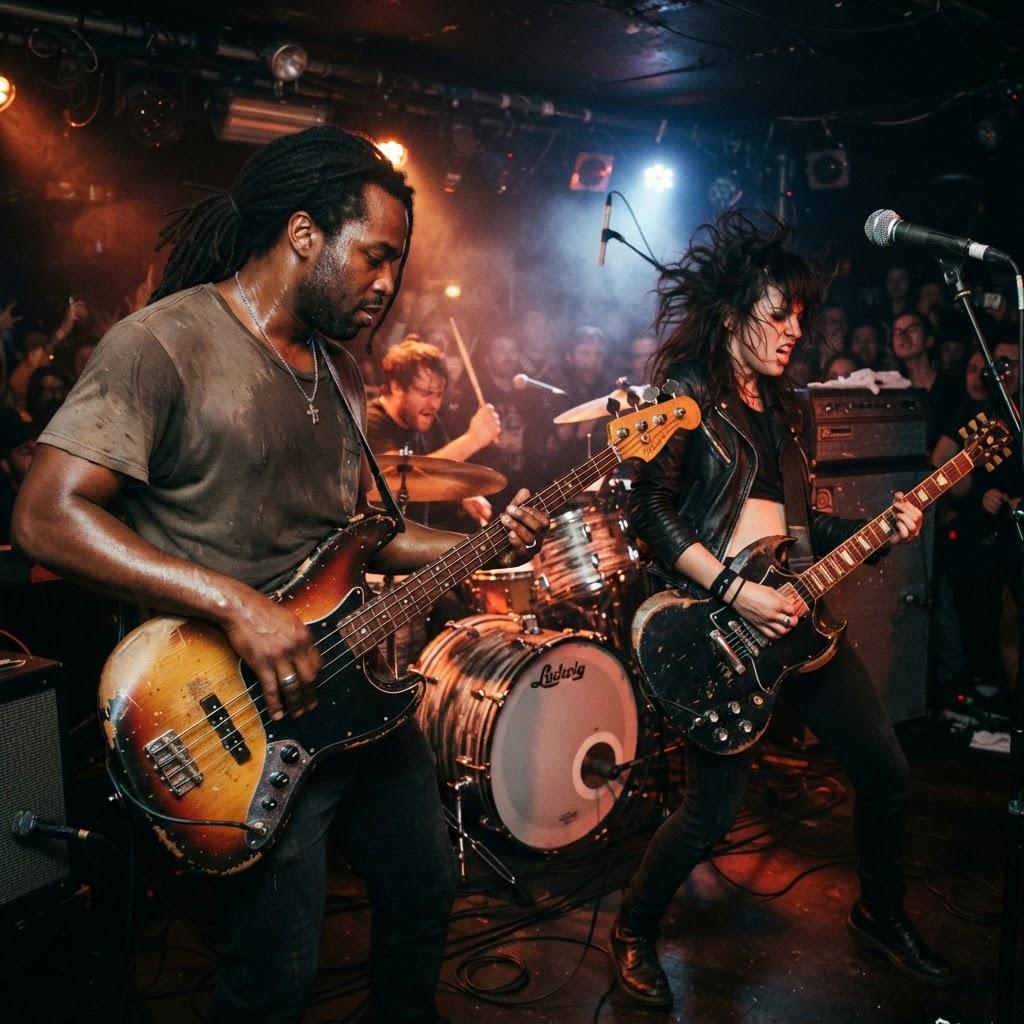
The secret sauce of Funk Rock is all about the 'pocket'—that elusive, magical space where the drums and the bass guitar lock into such a perfect rhythm that time seems to stop. Think of the bass guitar not as a background instrument, but as the heartbeat of the track; in this genre, the bassist uses 'slap' techniques, which is exactly what it sounds like—literally smacking the thick metal strings against the fretboard to create a percussive, popping sound. Pair that with the 'wah-wah' pedal, a gizmo for the electric guitar that makes it sound like it is talking, crying, or mocking someone, and you have the sonic blueprint. The tempo usually sits in a comfortable, mid-range pocket—not too fast to trip over, not too slow to put you to sleep—making it the ultimate engine for head-nodding. Structurally, these songs often ditch the predictable verse-chorus snooze-fest for long, hypnotic jams where the band just keeps the pressure on until the listener is properly hypnotized. It is all about the tension between the tightness of the rhythm section and the wild, unhinged improvisation of the guitarists.
Origins & Birth of the Sound
Funk Rock didn’t just wake up one morning and decide to exist; it was forged in the smoky, high-stakes atmosphere of late 60s and early 70s America, where genres were colliding like bumper cars at a county fair. You had musicians who were raised on the heavy, distorted riffs of British rock—think deep, fuzzy sounds that shook the floorboards—but they also had rhythm deep in their bones from listening to Motown and Stax records. It was a time of serious social change, and the music reflected that urgency. Artists wanted the visceral power of rock but they didn't want to lose the danceability that defined the soul scene. It started in basements and small clubs where bands would stretch out a standard rock riff, add a layer of syncopation—which is just a fancy way of saying putting the accent on the 'off' beat to make things jumpy—and suddenly, the audience wasn't just standing there with their arms crossed. They were sweating, they were moving, and they were finally feeling something real. It was the sound of musical rebellion being funneled through a filter of absolute, unadulterated groove.
The Pioneers & Legends
To understand the architects of this sonic madness, look no further than Sly and the Family Stone. Sly Stone was essentially a mad scientist of sound, blending soul, rock, and psychedelia until he created a brand new alloy. Then you have Jimi Hendrix, who, while often categorized as pure psychedelic rock, was essentially the godfather of the Funk Rock guitar aesthetic; his ability to make a guitar scream while holding down a rhythm that would make a drum machine blush is unparalleled. Later, you have legends like Red Hot Chili Peppers, who took that foundation and injected it with enough caffeine to wake up a neighborhood. They proved that you could be absolutely weird, dress like you were lost in a 70s costume shop, and still pack out stadiums. Bootsy Collins is another name that should be etched in gold; the man played bass with such a distinct, space-age bounce that he became the human definition of the funk. These pioneers weren't just musicians; they were sonic architects building palaces of rhythm out of nothing but grit, imagination, and a refusal to play it safe.
Defining Tracks & Era-Defining Moments
If you want the full experience, you have to look at the moments where the genre shifted from 'experimental experiment' to 'global obsession.' Tracks like 'Thank You (Falettinme Be Mice Elf Agin)' by Sly and the Family Stone are the ground zero of the genre; it is a song that tells you exactly who the band is without saying a word. Then there is the mid-80s explosion where the sound became harder and more aggressive. When you listen to 'Higher Ground' by the Red Hot Chili Peppers, you are hearing the genre being introduced to a whole new generation, stripped of its original polite constraints and doused in high-octane sweat. These songs were pivot points. They were the tracks played on massive, crackling speakers in urban parks, the ones that made people stop in their tracks and ask, 'What is that?' They mattered because they bridged the gap between the sophisticated, complex arrangements of soul music and the raw, unbridled aggression of rock and roll. Every time one of these tracks hit the airwaves, the musical map got a little smaller, and the world of Funk Rock got a little bigger.
Subgenres & Offshoots
The family tree of Funk Rock is as messy as it is glorious, featuring branches that go in directions even the creators probably didn't anticipate. You have 'Funk Metal,' which takes that slappin' bass and throws it into a blender with heavy metal's industrial-strength distortion and double-kick drums—it is music for people who want to break a sweat while headbanging. Then there is 'Rap-Rock,' a direct descendant that took the rhythmic vocal delivery of hip-hop and set it against a Funk Rock backdrop; it is the reason why the early 90s sounded like a giant, angry block party. There are even regional oddities, like 'Brazilian Funk Metal,' where the rhythms of samba and bossa nova get tangled up in heavy, jagged riffs, creating a sound that is as exotic as it is heavy. Each of these offshoots is just a different flavor of the same core philosophy: if the rhythm isn't making you move, you aren't doing it right. Some of these micro-genres faded into obscurity, but others, like the experimental noise-funk scenes of the 90s, left an indelible mark on how we think about what a 'band' can actually do.
Cultural Impact & Influence
Funk Rock’s reach goes far beyond the local record store; it basically wrote the playbook for the 90s aesthetic. You can see its influence in everything from the baggy pants and brightly colored jerseys of street fashion to the way modern pop stars mix genres to keep their sound fresh. It broke down the racial barriers in radio airplay, forcing programmers to admit that a rock station could play a 'funky' song and a soul station could host a screaming guitar solo. In film and television, the 'cool factor' of Funk Rock became a shorthand for 'this character is edgy but likable.' Think of any montage in a movie where a character is getting ready for a big day; if there is a bass-heavy, guitar-scratching track playing in the background, you are hearing the lingering DNA of Funk Rock. It influenced politics by championing the idea of individual expression over corporate homogenization, and it fundamentally changed how we view 'musicianship.' It shifted the focus from being a 'technically perfect' player to being a 'person with style,' proving that having a unique voice was far more important than playing every note in the scale correctly.
Controversies & Drama
Where there is ego, there is drama, and Funk Rock has had its fair share of spectacular blowouts. The biggest source of conflict was the 'sellout' debate. In the 80s and 90s, as the genre got more mainstream exposure, purists would lose their minds, claiming that adding synthesizers or pop-influenced choruses was a betrayal of the 'true' funk spirit. It was like watching a group of art-house film critics argue over whether a popcorn movie could be 'true cinema.' Then there were the legendary internal band conflicts. Because Funk Rock requires such intense, locked-in chemistry between the bassist and the drummer, if those two weren't getting along, the band would collapse faster than a house of cards. There were stories of bands breaking up in the middle of tour buses, of guitarists storming off stage because their solos were being 'choked' by the rhythm section, and even public feuds between bands over who 'stole' whose groove. It was petty, it was dramatic, and for the fans, it made every album release feel like a high-stakes soap opera. If you weren't fighting in the studio, were you even really making funk?
Global Spread & Regional Scenes
While it was born on the streets of the US, Funk Rock traveled fast. In the UK, it found a second home in the post-punk scene, where musicians took the groove and gave it a cold, industrial, and deeply cynical makeover. In Australia, the genre took on a surf-rock sheen, creating a breezy, sunshine-drenched version of the sound that made you want to drink a cold beer on a beach. Meanwhile, in Japan, the scene exploded with bands that took the technical complexity of Funk Rock to absolute extremes, creating songs that were so fast and complicated that they made Western ears spin. Each of these scenes brought something unique to the table. The British brought the moodiness, the Australians brought the groove-pop, and the Japanese brought the virtuosity. It became a global language, one that didn't require a translator because everyone understands the universal urge to move when a good bassline hits. It is fascinating to look at how a localized, American sound ended up influencing kids in Tokyo and London to pick up a bass and start practicing their slaps until their thumbs went numb.
The Modern Landscape
Today, Funk Rock is in a fascinating place—it’s not exactly dominating the Top 40, but it is everywhere you look if you know where to listen. It has become a hidden ingredient in the music of modern pop artists who want to add a bit of 'organic' soul back into their computer-generated tracks. You hear its echoes in the production of modern hip-hop, where artists sample those classic, dusty funk breaks to give their beats a sense of history and gravitas. On platforms like TikTok, we are seeing a resurgence of 'instrumental proficiency,' where young musicians are posting clips of themselves nailing complicated slap-bass licks, showing that the technical side of the genre is thriving with a whole new generation. It is no longer just about the old-school rock bands; it is about the bedroom producer who understands that a little bit of grit and a whole lot of swing makes for a better song. Funk Rock has transformed from a 'scene' into a 'tool'—a secret weapon for any artist who wants to make music that doesn't just sit there, but actually has a pulse and a personality.
How to Dive In
Ready to get funky? Do not just dip your toe in; jump straight into the deep end. Start by putting on 'Blood Sugar Sex Magik' by the Red Hot Chili Peppers—it is the quintessential textbook for the genre. Once you have worn that out, pivot to Sly and the Family Stone’s 'Stand!' to hear where the magic began. If you want to hear the heavier side of the coin, track down some Mother's Finest, a band that proved rock-solid riffing and deep-pocket funk were meant to live together. For a truly wild experience, listen to anything by Parliament-Funkadelic; it is less of a band and more of a psychedelic spaceship that happens to play music. Don't worry about trying to learn the music theory or the history all at once. Just hit play, turn the volume up until your neighbors start to complain, and let the bassline do the heavy lifting for your brain. This music is designed to make you move, so stop thinking and start listening. If your neck isn't sore by the end of your first listening session, you aren't doing it right. Welcome to the funk—you are never going to want to leave.