Mid-1970s
Punk
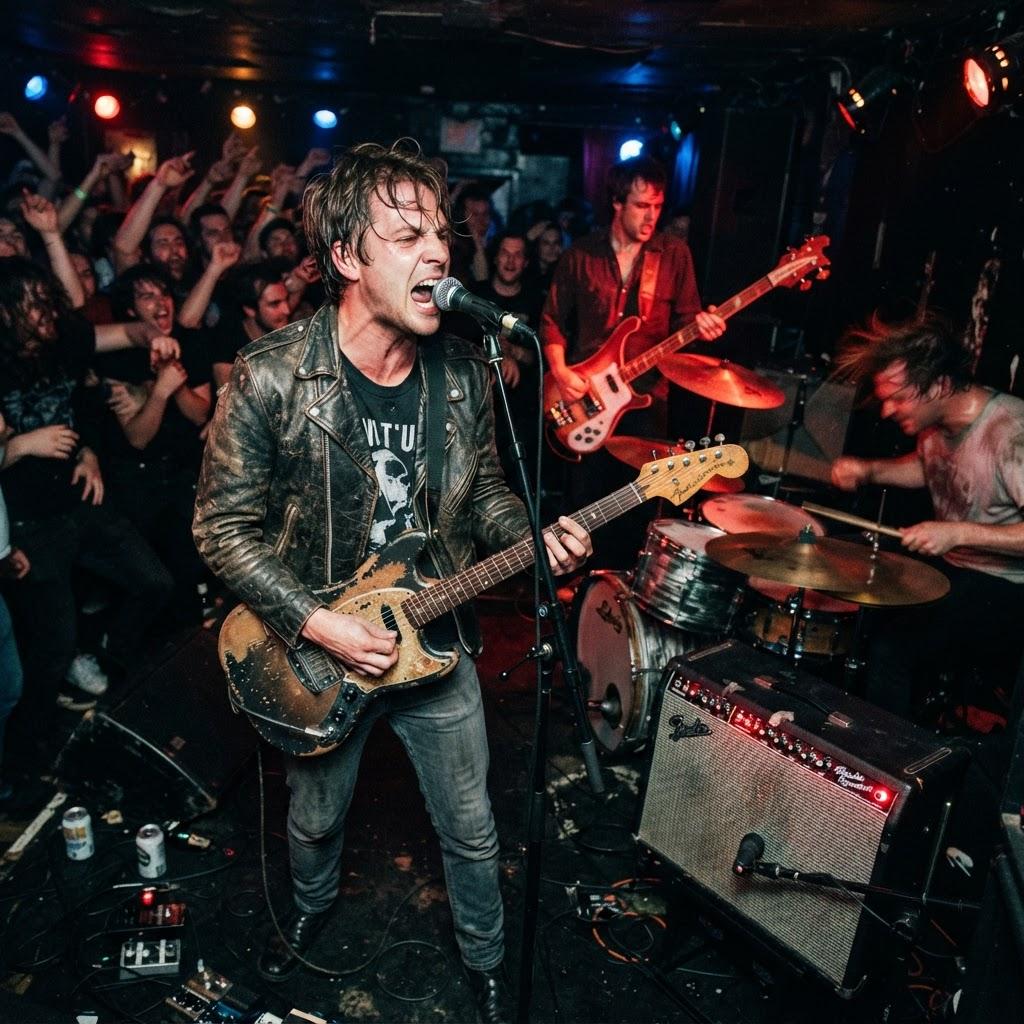
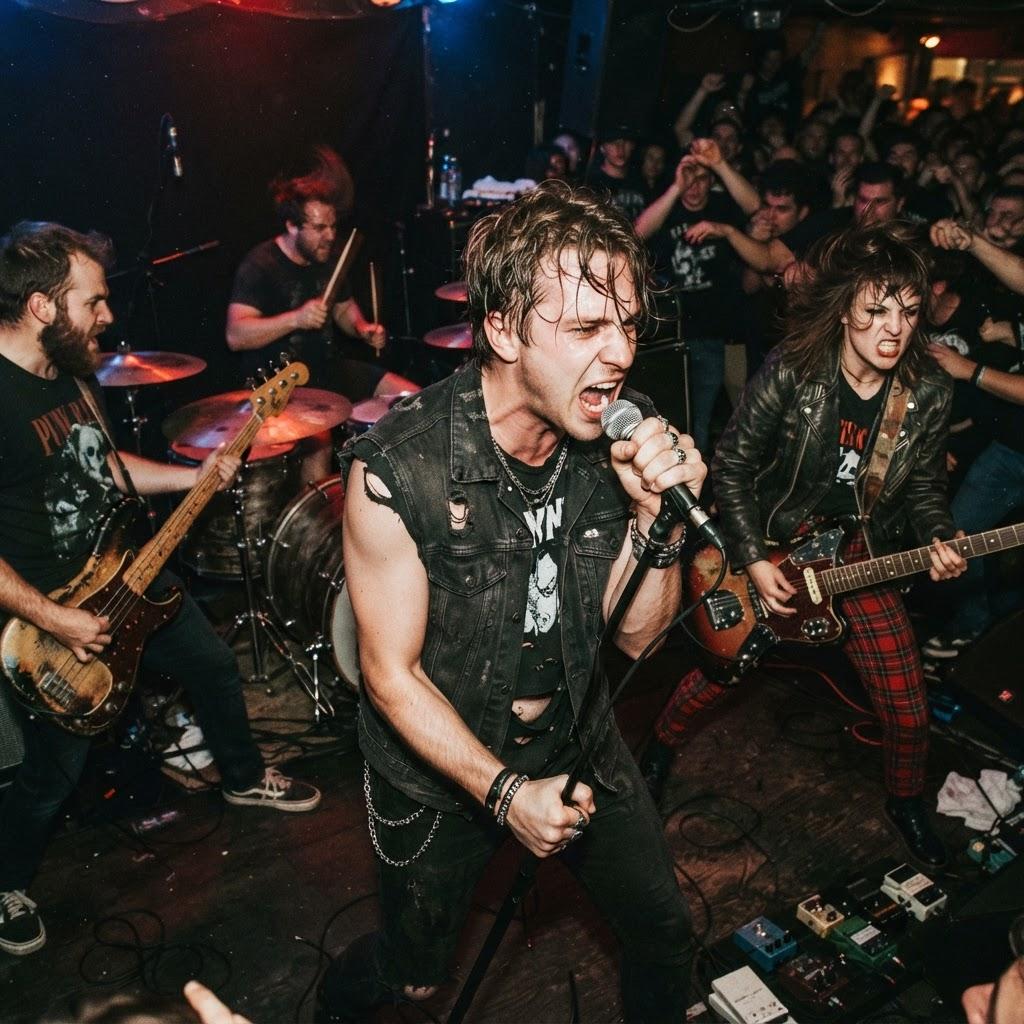
Punk is the musical equivalent of a leather jacket-clad rebel kicking down the door of a stuffy gala just to spill a drink on the buffet table. It is loud, messy, gloriously imperfect, and absolutely essential for anyone who has ever felt like screaming at the top of their lungs.
Meet the Genre
Imagine you walk into a fancy bakery where everything is perfectly frosted, the napkins are embroidered, and everyone speaks in hushed, polite tones about the quality of the flour. Now, imagine someone enters that bakery, trips over their own feet, sets a firecracker off in a box of donuts, and starts shouting poetry about how the government is a lie. That, my friends, is the spirit of Punk. It is the genre that looked at the bloated, over-produced rock stars of the 1970s—who were busy playing twenty-minute guitar solos in capes—and decided that two minutes of noisy, glorious, three-chord frustration was infinitely more honest. Punk is not about being a virtuoso; it is about having something to say and being too impatient to wait for music lessons to say it. It is the art of the glorious mistake, the beautiful scar, and the loud, sweaty room where everyone is somehow both fighting and hugging at the same time. You do not need to read music to make punk, you just need a pulse and a reason to be annoyed. It is the ultimate genre of the underdog, the kid who was told no, and the artist who refused to wait for permission to be heard. It is as recognizable as a safety pin through a denim sleeve: if it hurts your ears a little, makes your heart beat faster, and makes you want to jump over a sofa, you have found it.
The Sound & Signature Elements
The sonic blueprint of punk is shockingly simple, which is exactly why it is so brilliant. At its heart is the power chord. If a standard guitar chord is a sophisticated, complex sentence, a power chord is just someone punching the wall. You take two or three notes, you crank the distortion until the sound becomes a fuzzy, thick wall of noise, and you play it as hard and as fast as humanly possible. The rhythm section is equally utilitarian; the drums are almost always driving a steady, frantic beat known as the 'four-on-the-floor' or a lightning-fast 'downstroke' pattern, which sounds like someone running down a staircase way too fast. There is no room for filler. If a song takes longer than three minutes to get the point across, you have failed. The production is usually dry and raw—none of that shiny, over-polished studio wizardry where they make a drum kit sound like it was recorded inside a cathedral. In punk, you want the drums to sound like they were recorded in a basement while the police were knocking on the door. It is 'lo-fi' by design, meaning it intentionally avoids high-end studio gear to keep that authentic, gritty feel that makes the listener feel like they are standing right in front of the amp.
Origins & Birth of the Sound
The birth of punk is a bit like a double-feature movie starring two cities that hated each other but shared a nervous breakdown. In New York City, the epicenter was a grime-streaked club called CBGB, which was technically a Country, Bluegrass, and Blues club that accidentally became the nursery for the loudest, meanest sounds on the planet. Here, the vibe was intellectual and artsy but deeply detached from the mainstream music industry. Meanwhile, across the pond in London, the situation was far more desperate. The UK in the mid-70s was grappling with economic stagnation, high unemployment, and a general sense of 'what is even the point?' London punk was born from the streets—a cocktail of anger, fashion, and social critique. It was a reaction to the sheer boredom of a society that seemed to be stuck in a loop of grey skies and stale tea. While New York was playing with the aesthetic of alienation, London was ready to burn the whole thing down. These two scenes didn't exactly hold hands, but they collided with the mainstream music world like a meteor, proving that the old rules of rock stardom were officially dead.
The Pioneers & Legends
If you are looking for the family tree of punk, you start with the Ramones in New York—four guys who didn't even like each other that much but shared a uniform of ripped jeans and leather jackets. They were the masters of the 'one-two-three-four' count-off, treating every song like a race to the finish line. They were the sonic equivalent of a caffeine overdose. Then you look to the UK, where the Sex Pistols arrived like a swarm of angry hornets. They were less about playing music and more about being a beautiful, chaotic catastrophe. Johnny Rotten, the lead singer, had a sneer that could curdle milk, and their mere existence on national television was enough to cause a moral panic that gripped the British government. But you can't talk legends without mentioning The Clash, the band that decided punk could be political, worldly, and musically diverse, proving that you could write a protest anthem and make it sound like a stadium-filling hit at the same time. These weren't just musicians; they were characters in a very loud, very dangerous play, where the stage was a platform for absolute defiance.
Defining Tracks & Era-Defining Moments
If you want to know what this sounds like, you have to start with the Ramones’ 'Blitzkrieg Bop.' It is the 'ABC's' of punk: catchy, simple, and hits you like a truck in the first three seconds. Then there is the Sex Pistols’ 'Anarchy in the U.K.,' a song that essentially declared war on polite society and the British charts simultaneously. It was a cultural firebomb. Then you have The Clash’s 'London Calling,' which proved that punk wasn't just about yelling; it was about having a world-view, mixing in reggae rhythms and apocalyptic lyrics. A pivotal moment was the Anarchy Tour in the UK, where the Sex Pistols were banned from almost every venue in the country, effectively turning them into a symbol of pure rebellion. Another moment was the release of The Damned’s 'New Rose,' which is widely considered the first independent punk single, proving that you didn't need a massive label to get your music onto the shelves of record stores. These moments weren't just about the music; they were about the disruption of the status quo, proving that a record could be a manifesto, a weapon, and a piece of history all at once.
Subgenres & Offshoots
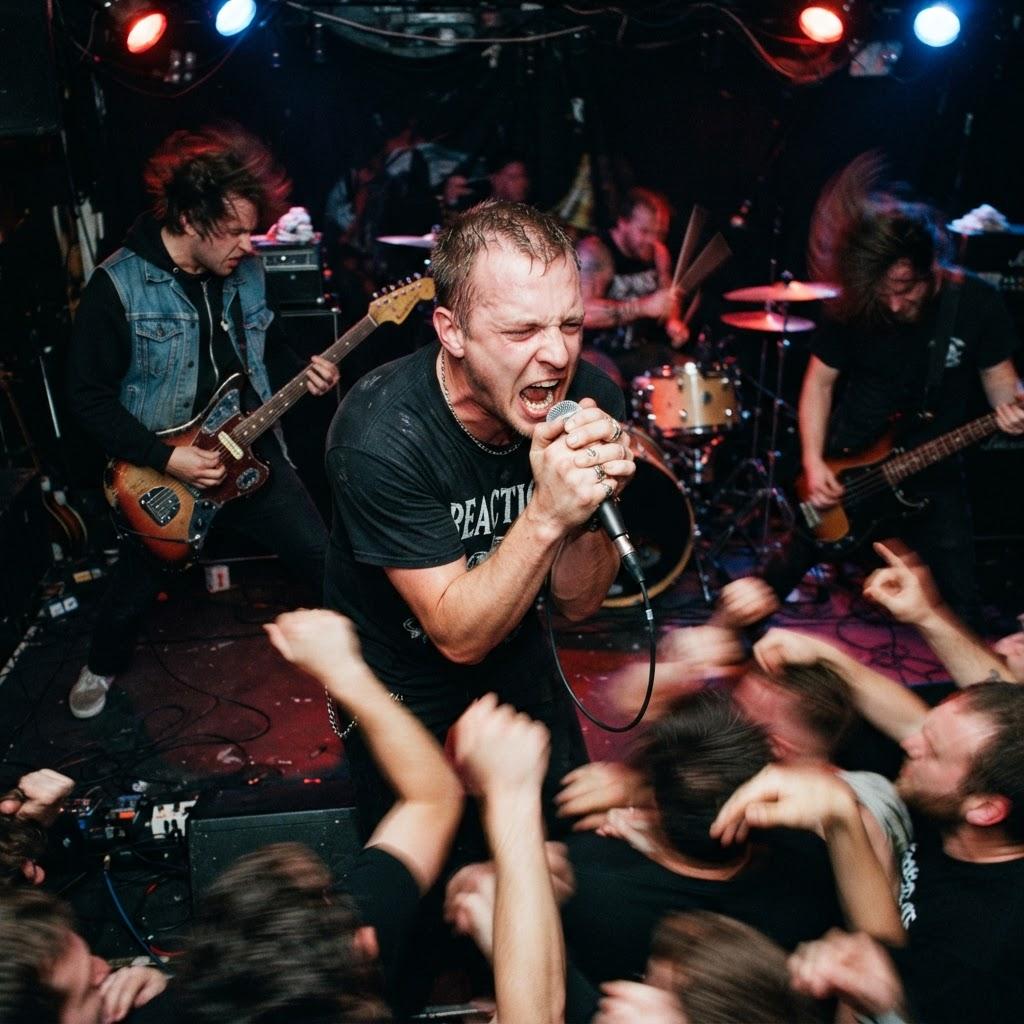
Once the original punk explosion happened, it started splitting off into a thousand different directions, like a firework hitting a concrete floor. First, you had Hardcore, which took the speed and rage of punk and pushed it to an athletic, borderline violent extreme—think bands like Black Flag or Bad Brains, where the music became shorter, faster, and much more intense. Then came Post-Punk, which decided that punk didn't have to be just loud guitars; it could be moody, experimental, and use synthesizers to create cold, atmosphere-heavy soundscapes like those found in Joy Division or Gang of Four. You also had Pop-Punk, which kept the power chords but added catchy, melodic choruses that sounded like they belonged on the radio, bridging the gap between rebellion and chart success. Then there were genres like Ska-Punk, which brought in brass sections and upbeat dance rhythms from Jamaica to mix with the aggressive, distorted guitars, creating a sound that made it impossible to stand still. Every subgenre kept the original 'I can do it myself' attitude, but each added its own layer of musical curiosity, proving that the original spirit was far more flexible than anyone first imagined.
Cultural Impact & Influence
The influence of punk is so baked into our culture that we often don't even see it. Think about the way people dress—ripped jeans, safety pins, leather jackets, neon hair—that was all essentially a punk uniform designed to shock the polite suburbs. Before punk, if you weren't wearing a suit or a very specific type of rock-star costume, you were invisible. Punk made 'looking like a mess' an aesthetic choice. Beyond the clothes, it changed the way we handle media. The 'fanzine' culture—where kids would cut up magazines, type things on old typewriters, and photocopy their own tiny, independent newspapers—basically predicted the entire structure of blogging and social media. The idea that you don't need a corporate giant to distribute your voice is a direct descendant of the punk movement. It shifted politics, too, making it cool to question authority, to doubt the news, and to be openly critical of the status quo. From the rise of DIY indie films to the way we consume digital art today, the punk ethos of 'if they won't let you in the building, build your own building' is the silent engine driving modern creative freedom.
Controversies & Drama
Where there is punk, there is almost certainly a scandal, usually involving someone getting arrested, a venue getting trashed, or a talk-show host clutching their pearls in horror. The most famous bit of drama was the Sex Pistols’ infamous television interview on the Today show in 1976, where they dropped a few swear words on afternoon TV, leading to a national meltdown in the UK. The newspapers literally called for their heads, and they were effectively blacklisted, which, of course, only made them more popular among the youth. There was the constant tug-of-war between 'selling out' and 'keeping it real,' which fueled endless, petty arguments in scenes across the globe. Bands would break up because one member dared to use a chorus pedal or—heaven forbid—record at a major studio. It was a petty, glorious, and occasionally stupid war over authenticity. Censorship was a regular occurrence, with radio stations refusing to play tracks and shops refusing to sell records with 'offensive' covers. But the controversy was part of the fun; it was a way for these bands to signal to their fans that they were dangerous, exciting, and absolutely not to be invited to a family dinner.
Global Spread & Regional Scenes
Punk didn't just stay in New York and London; it was a virus that spread instantly because it was so easy to catch. In Los Angeles, the scene turned into a high-speed, hardcore machine, characterized by the legendary mosh pits at clubs like the Whisky a Go Go. In Washington D.C., the 'Straight Edge' movement emerged, rejecting the drugs and alcohol associated with the rock lifestyle in favor of a clean, intense, and hyper-focused version of punk that centered on community. In Japan, bands like The Stalin and The Blue Hearts took the UK blueprint and turned the theatricality up to eleven, blending the sound with a distinctly Japanese sense of visual overload and melodic aggression. Even in countries under oppressive regimes, punk became a way to voice dissent. In the former Soviet Bloc, underground punk bands played in basements, risking jail time just to pass around tapes of their music. It became a global language. It didn't matter what language you spoke; if you played a power chord and yelled into a microphone, everyone in the room knew exactly what you were feeling.
The Modern Landscape
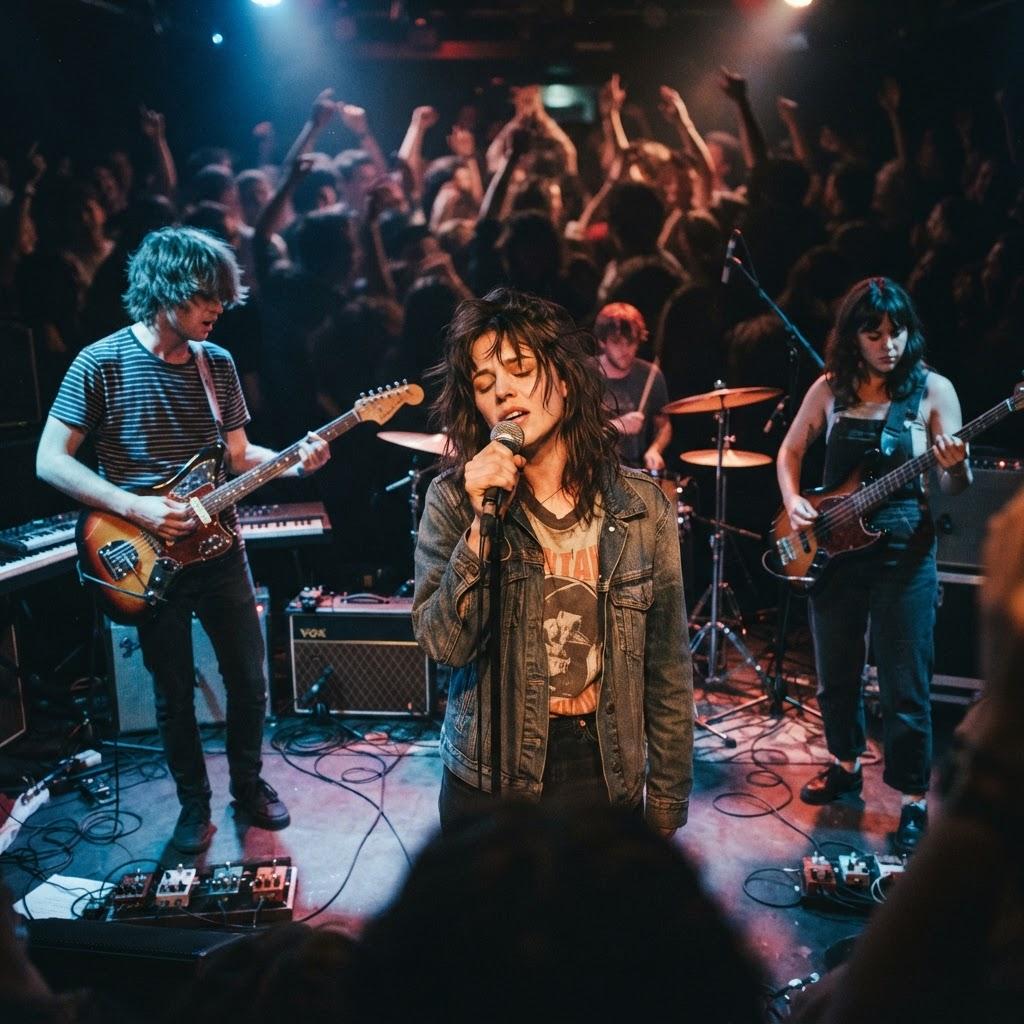
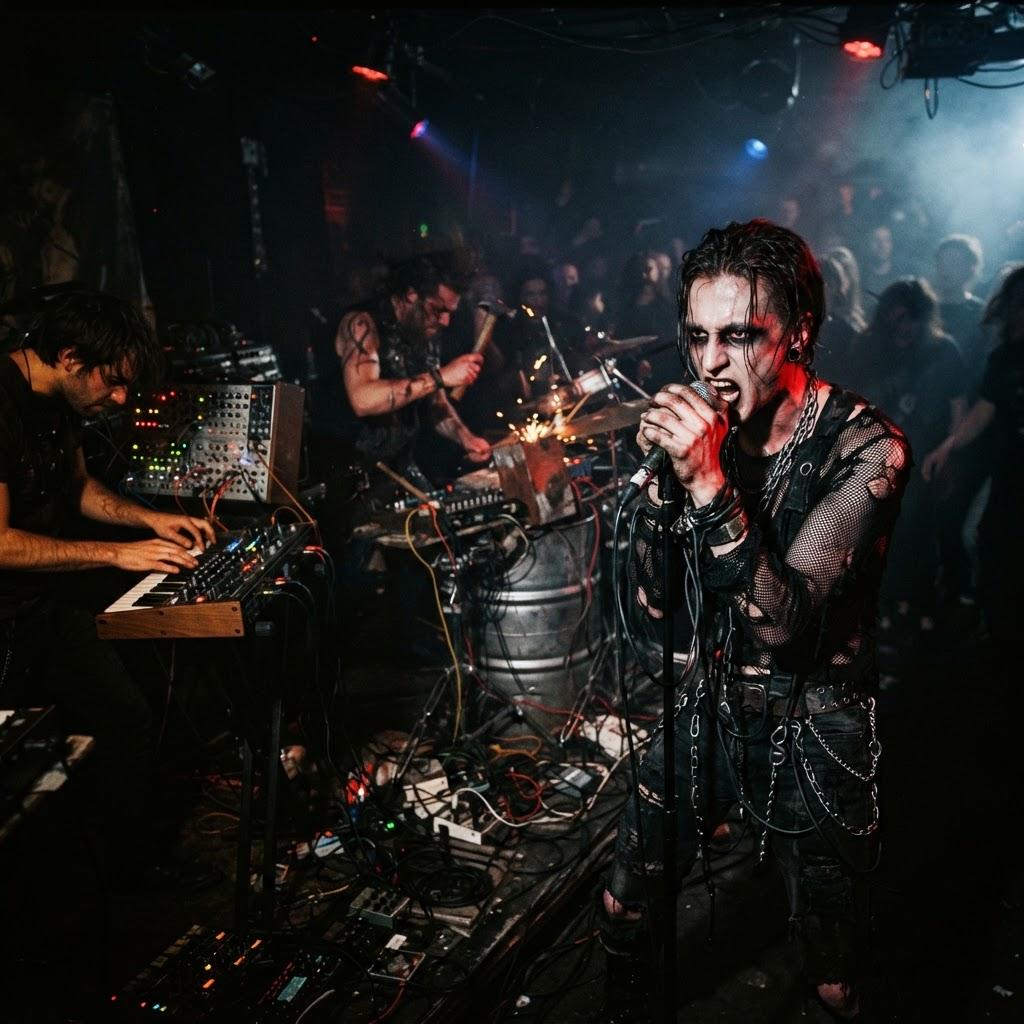
Today, punk is in a weirdly healthy place. It is no longer just a bunch of guys in leather jackets playing three chords in a garage. It has successfully mutated into everything. You have artists in the hip-hop world who carry the same reckless, anti-establishment energy that the Sex Pistols had, using the same DIY ethics to disrupt the music industry. You see the influence in modern rock, where bands are embracing that raw, unpolished, basement-tape sound again because they are tired of how perfect and soulless modern digital music has become. There are new bands popping up everywhere, keeping the torch alive, but they are also incorporating electronic textures, experimental noise, and global influences that the original pioneers never could have imagined. Punk is no longer a 'scene' in the sense that you have to go to a specific club to hear it; it is a mindset that exists in bedrooms and studios across the internet. It is now less of a genre and more of a ghost in the machine, a spirit that pops up whenever someone decides they have had enough of the status quo and wants to make some noise.
How to Dive In
Ready to ruin your hearing and find your new favorite obsession? Start with the classics to get your bearings. Listen to 'Ramones' by the Ramones from front to back—it is only thirty minutes long and it will change your life. Then, take on 'Never Mind the Bollocks, Here's the Sex Pistols' for the pure, unadulterated attitude. If you want to hear how punk can get complex and smart, put on The Clash’s 'London Calling.' Once you have dipped your toes in, look for bands like The Buzzcocks for the melodic side, and Bad Brains for the sheer, technical intensity. While you are listening, pay attention to the space between the notes. Listen to the way the bass provides the structure while the guitar just goes absolutely wild. Don't worry about whether it sounds 'good' in the traditional sense—that is not the point. The point is to feel the electricity. Punk is a gateway drug to a whole world of independent, DIY music that doesn't care if you like it or not. Turn the volume up, ignore the neighbors, and let the noise wash over you. There is no right way to be a punk fan, as long as you hit play with an open mind and a loud speaker.